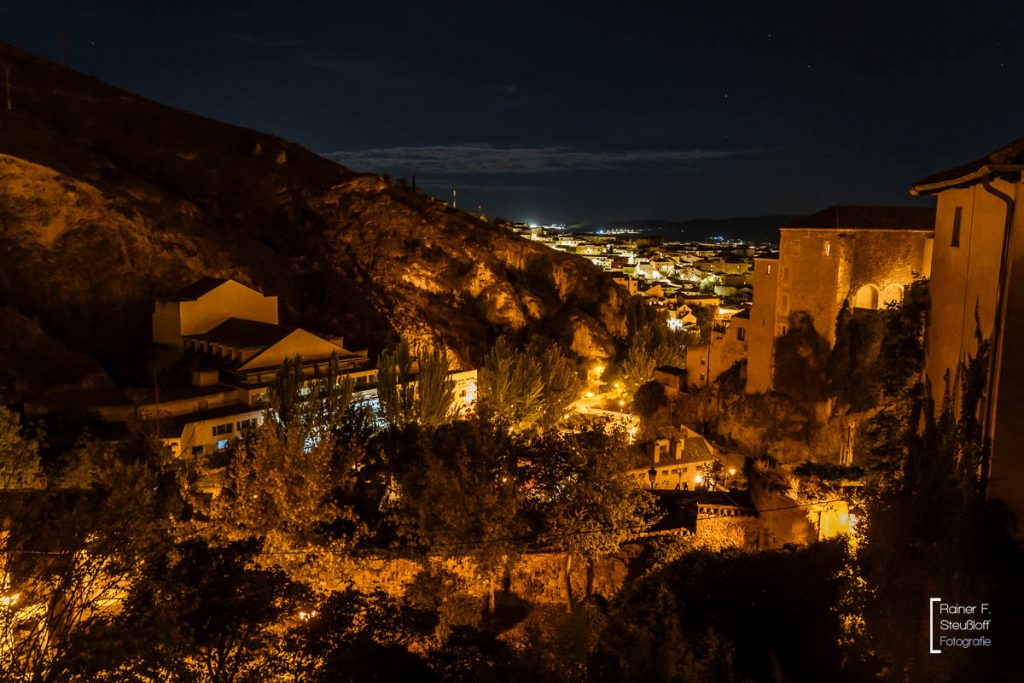
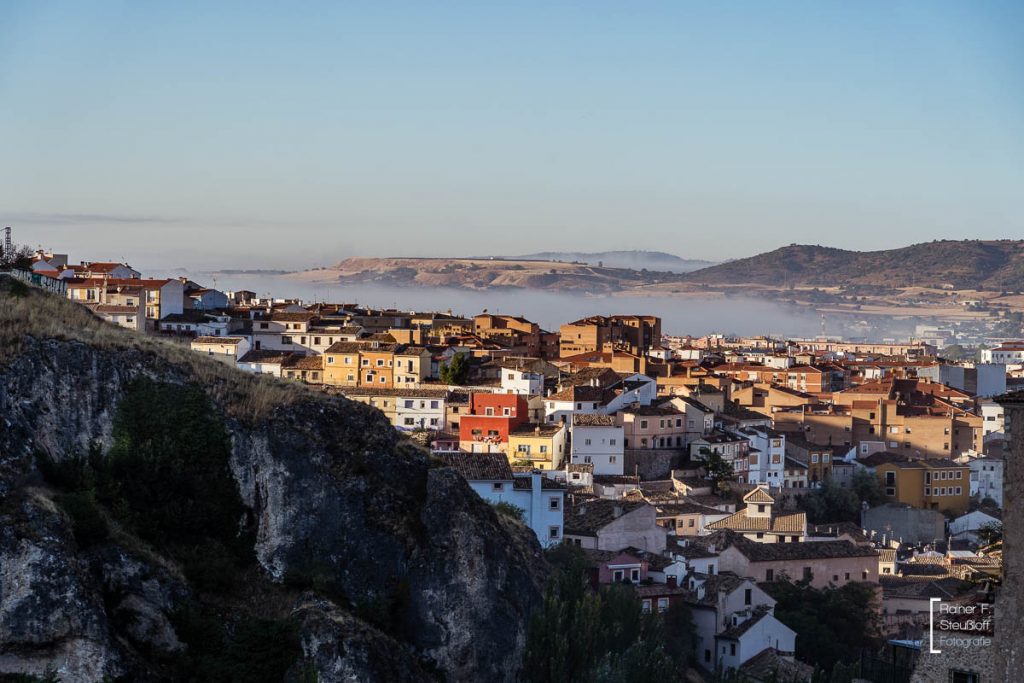
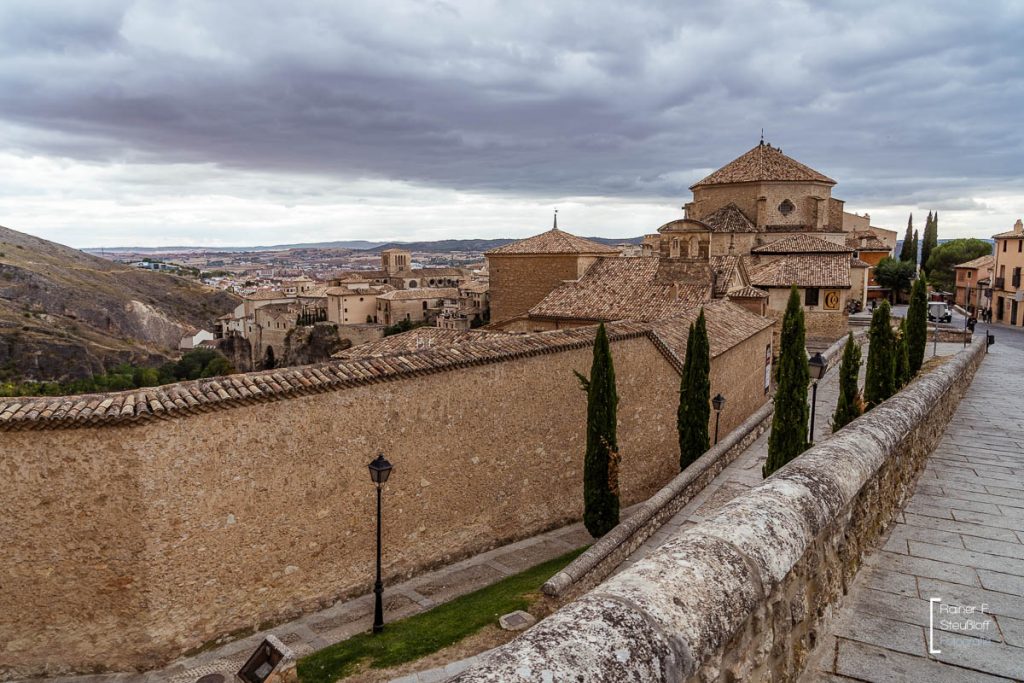
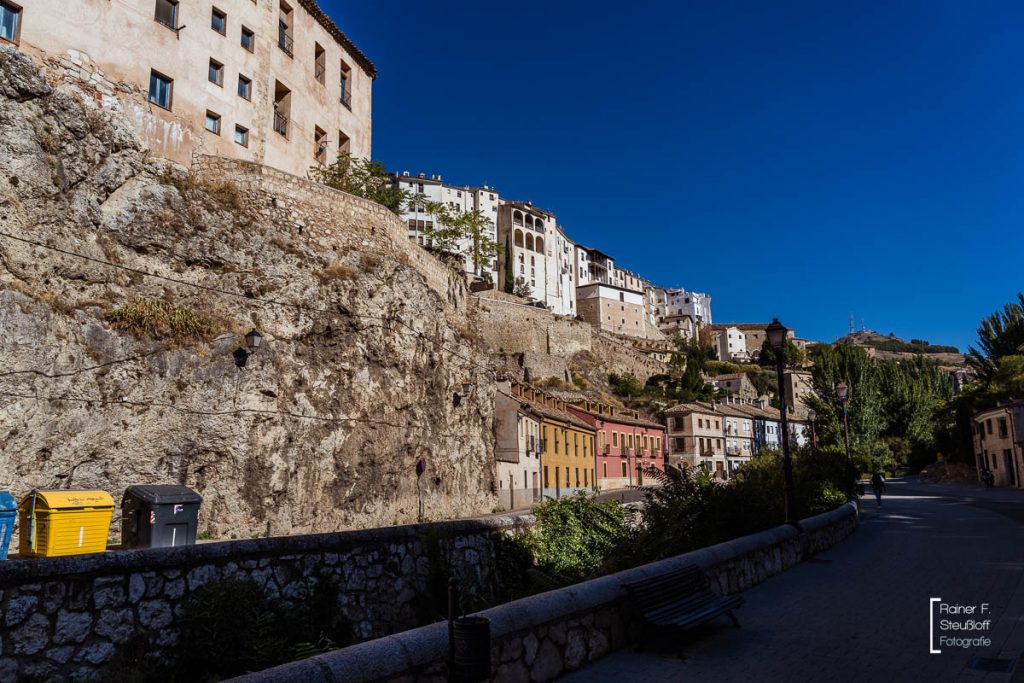
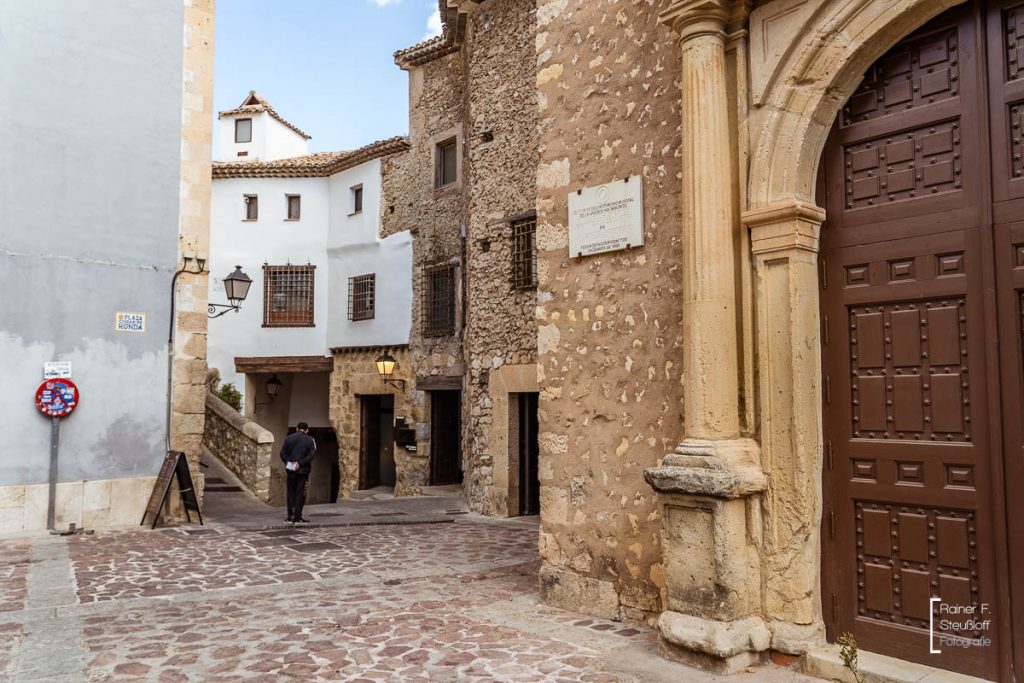
Eine Stadt auf zwei Ebenen. Unten moderne Provinzhauptstadt, oben historische Altstadt mit Kathedrale und Festung. Wer nach oben möchte, muss gut zu Fuss sein. Unzählige steile Treppen führen durch den Ort. Wenige enge Straßen lassen Verkehr zu, die Plaza Mayor ist weder schön noch gemütlich, sie ist voller Autos und Lastverkehr. Wer eine Ferienwohnung gemietet hat, muss sich unten abholen lassen. Nur Einwohner dürfen mit dem PKW in das UNESCO Welterbe. Die Vorfahren haben nicht an den Bedarf der heutigen Zeit gedacht.
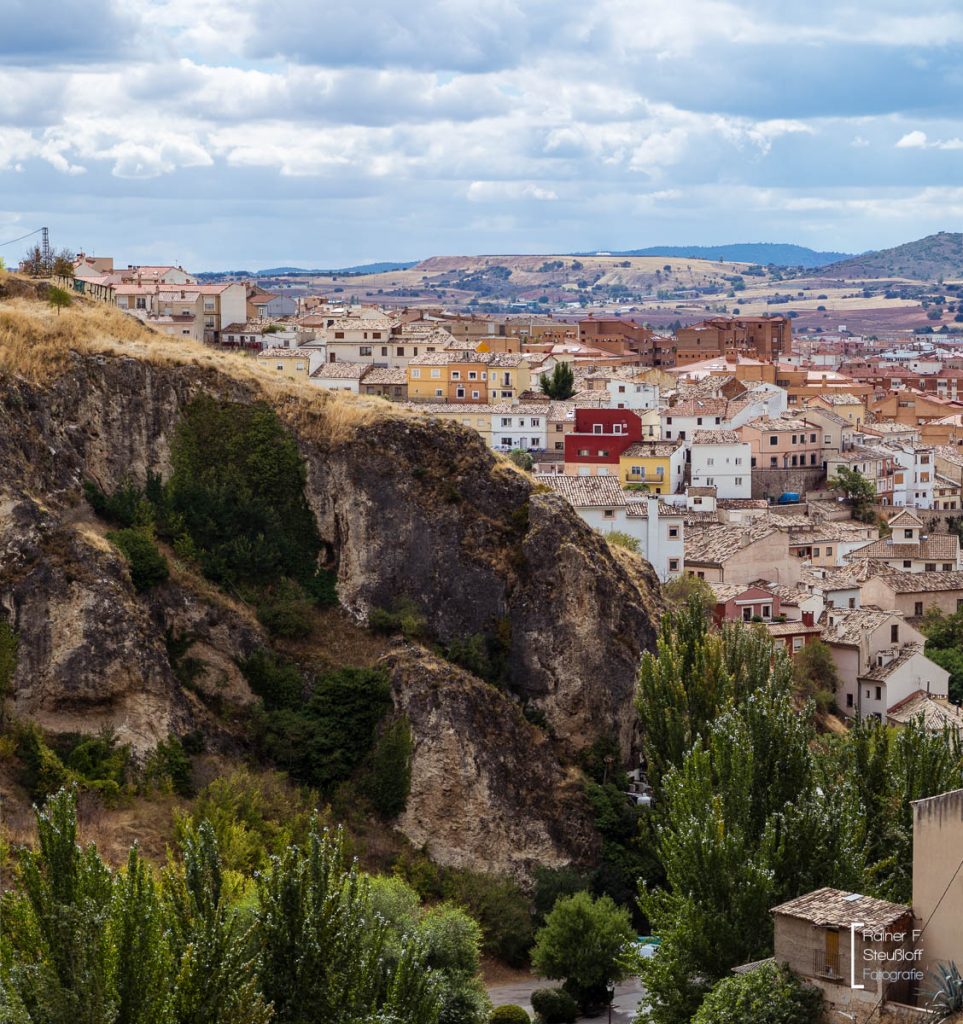
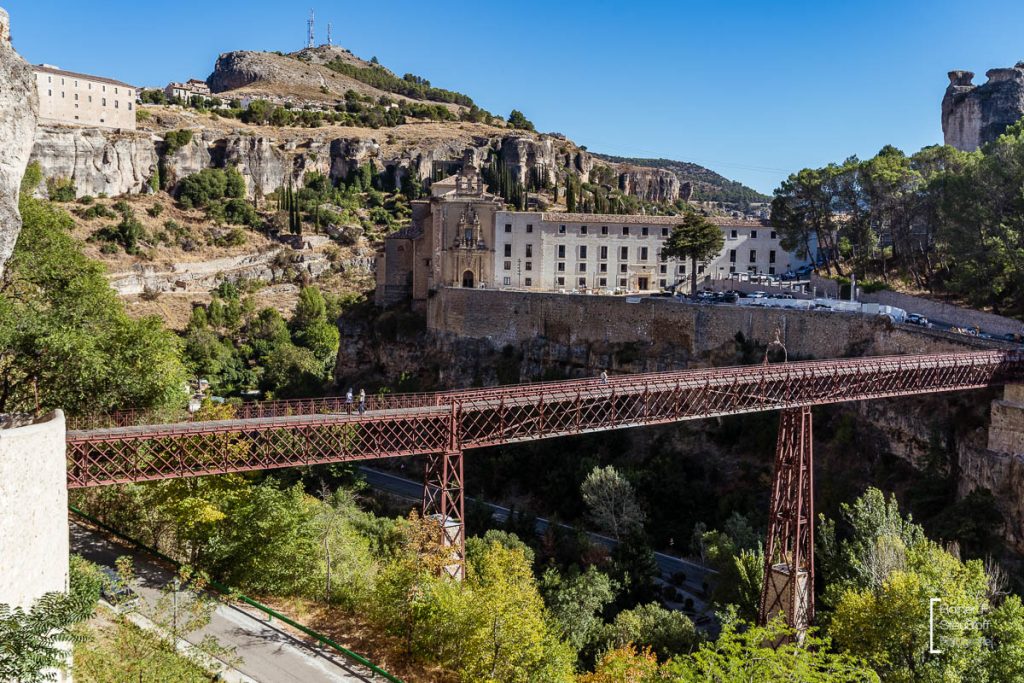
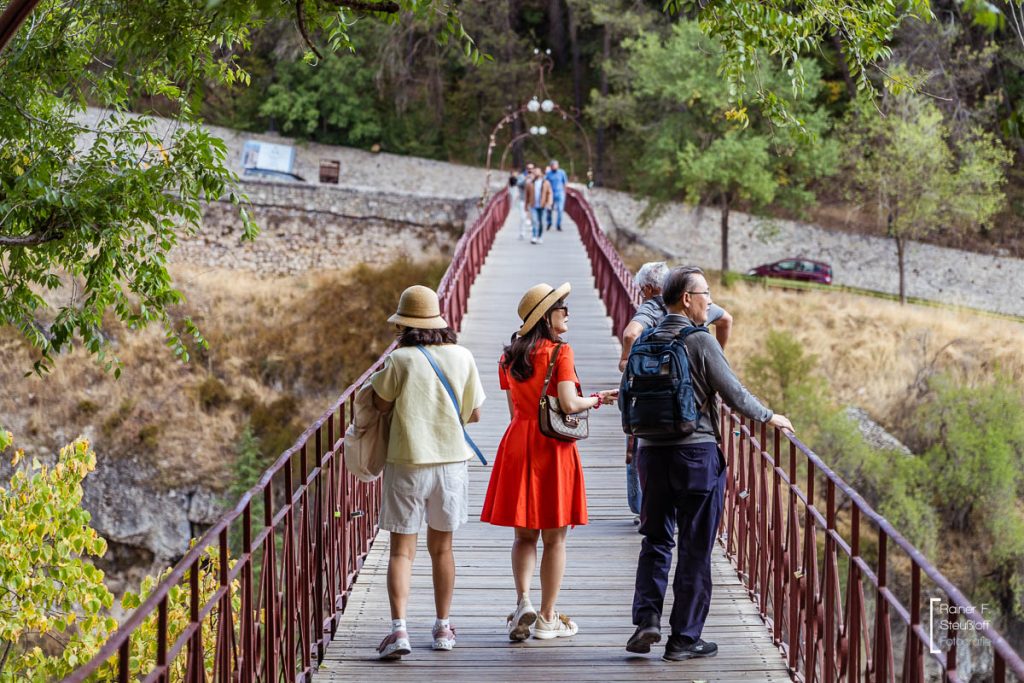
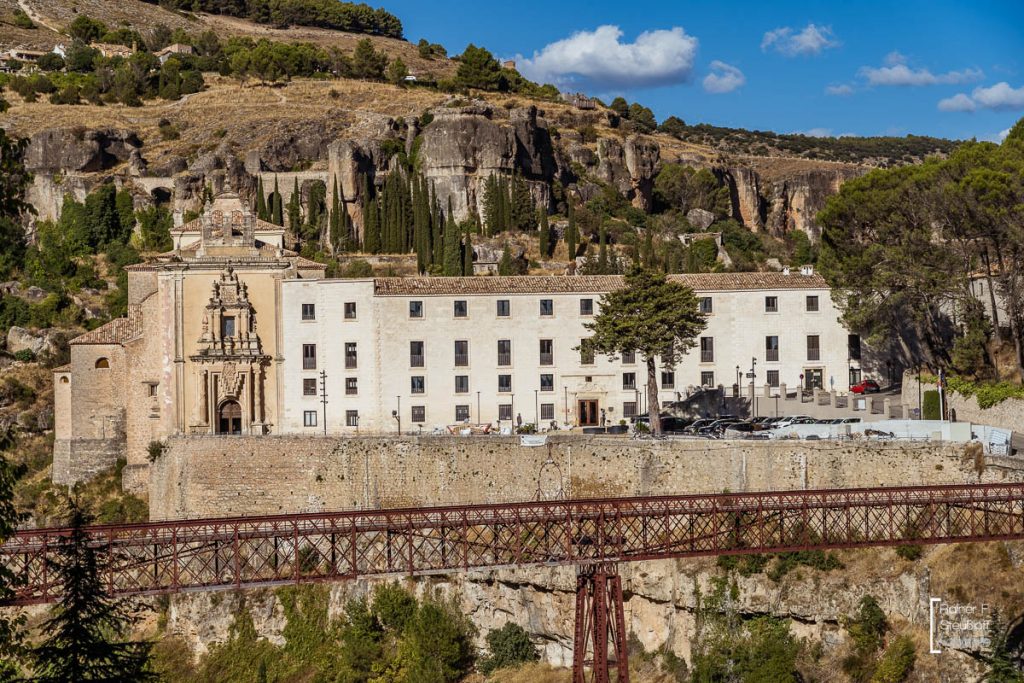
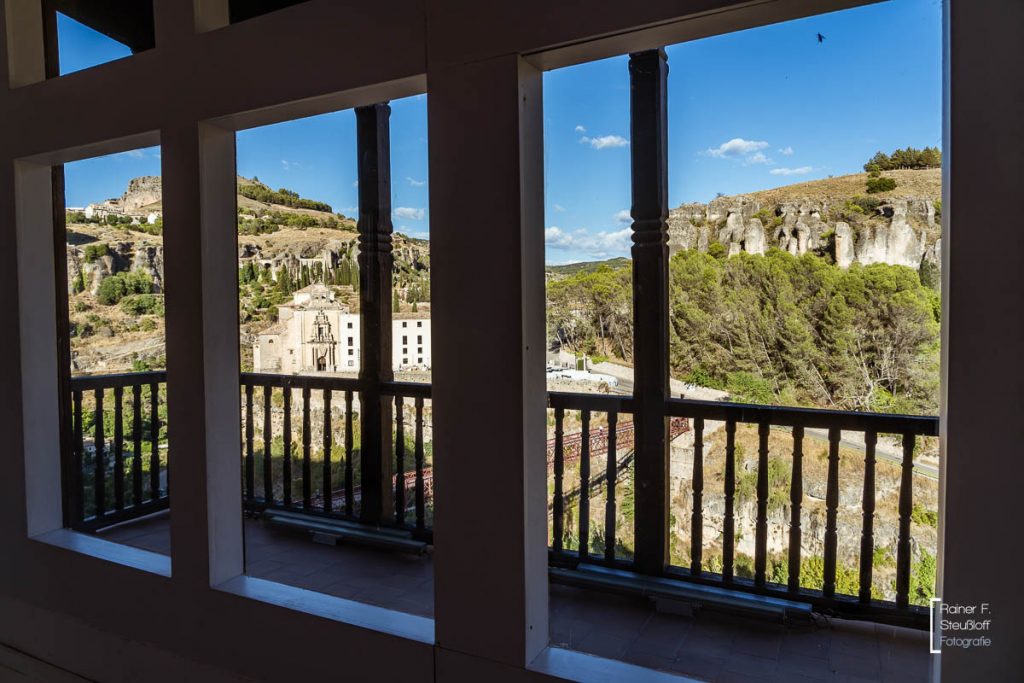
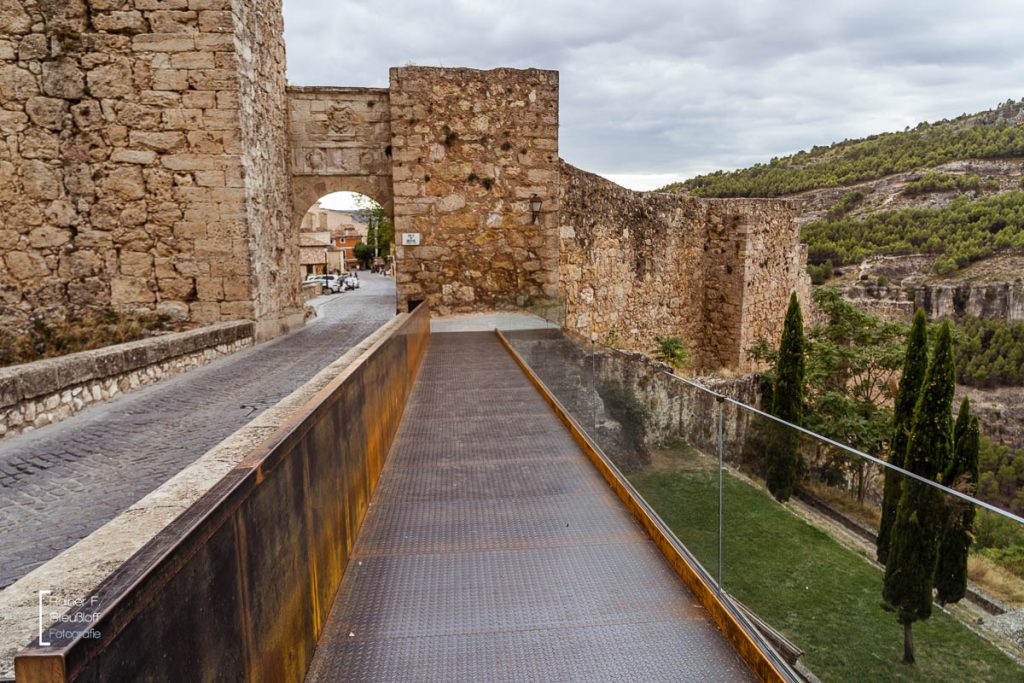
Ja höher man sich durch den Ort schlängelt, je spektakulärer wird die Aussicht. Vor einem liegen tiefe Täler, die in Jahrmillionen aus dem Boden gewaschen wurden. Über eine hohe Brücke, die Puente de San Pablo, ist die Altstadt mit dem ehemaligen Kloster und heutigen Parador verbunden. Nichts für schwache Nerven. Durch den Ort geht es hoch, entlang der Stadtmauer, zur Burg und dem Stadttor in den neuer Teil des Ortes.
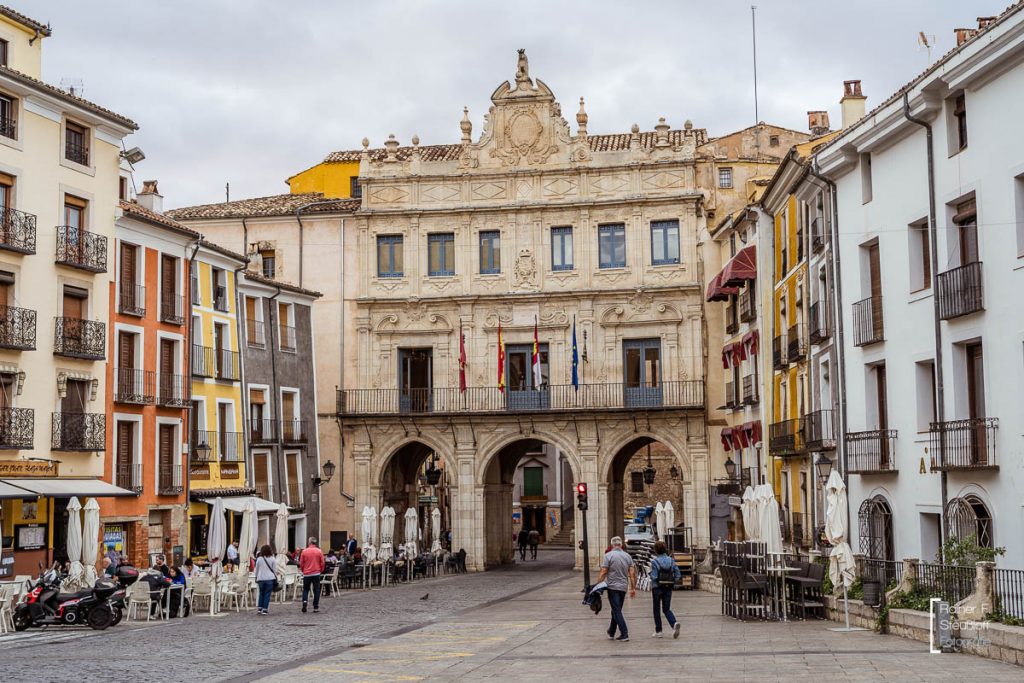
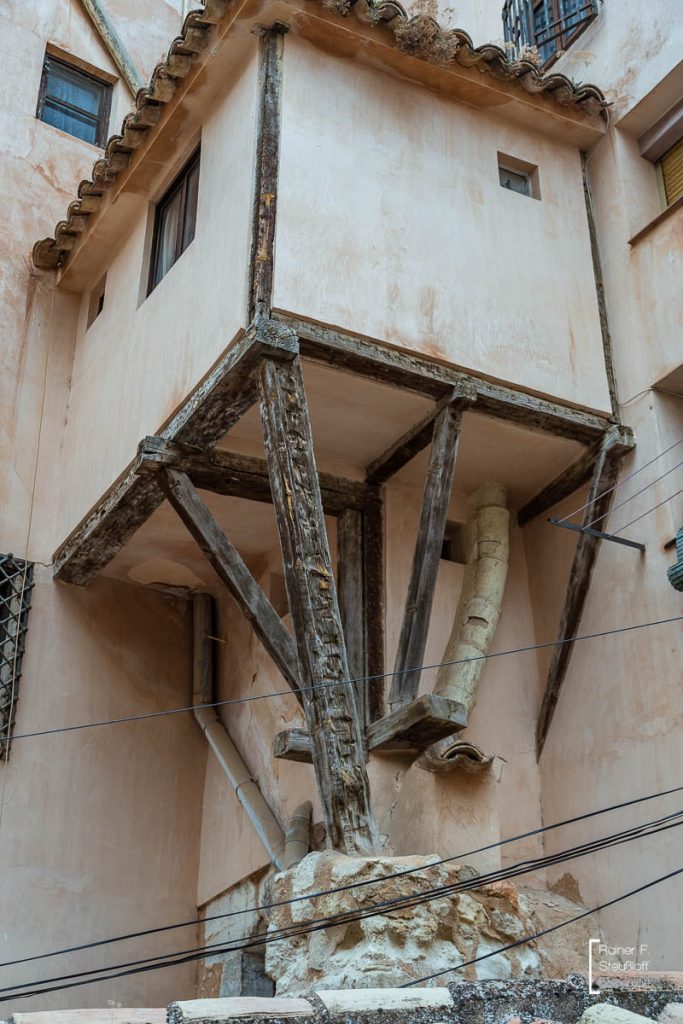
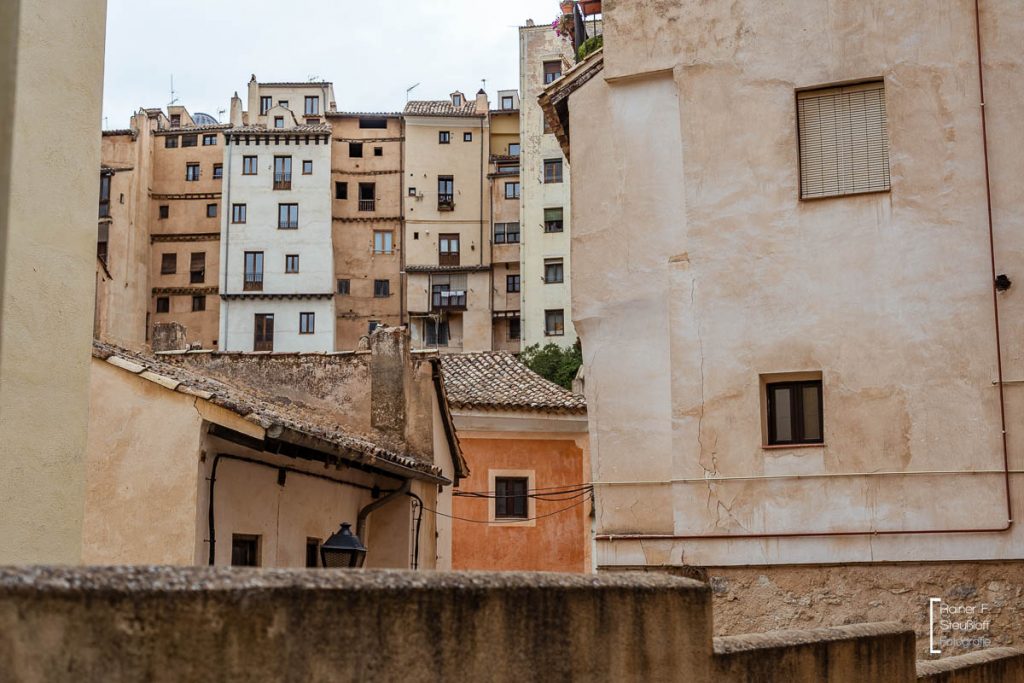
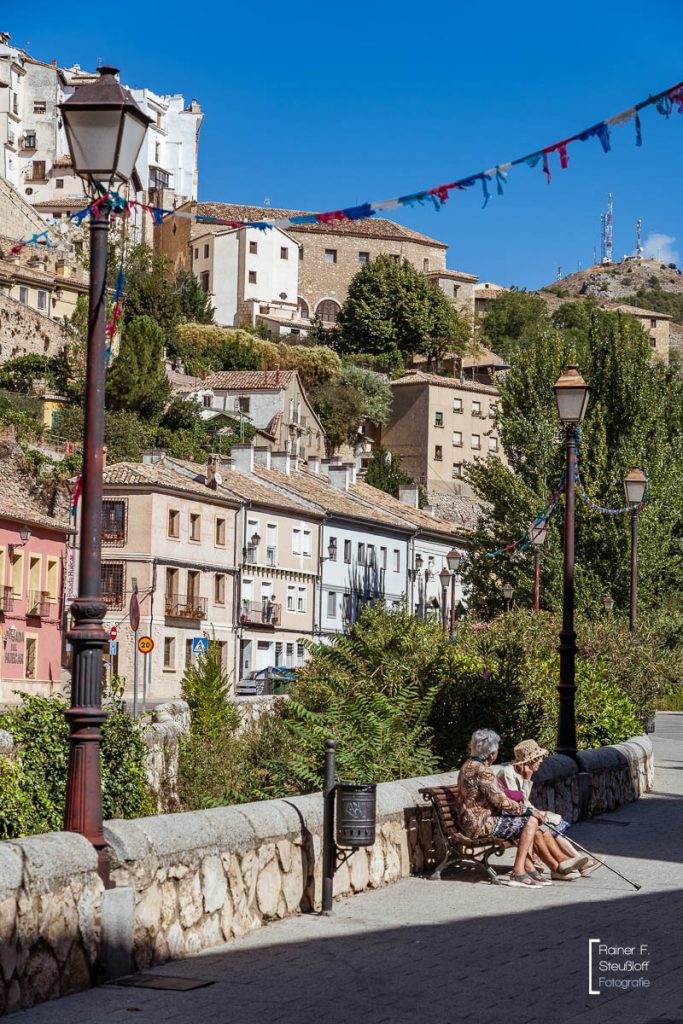
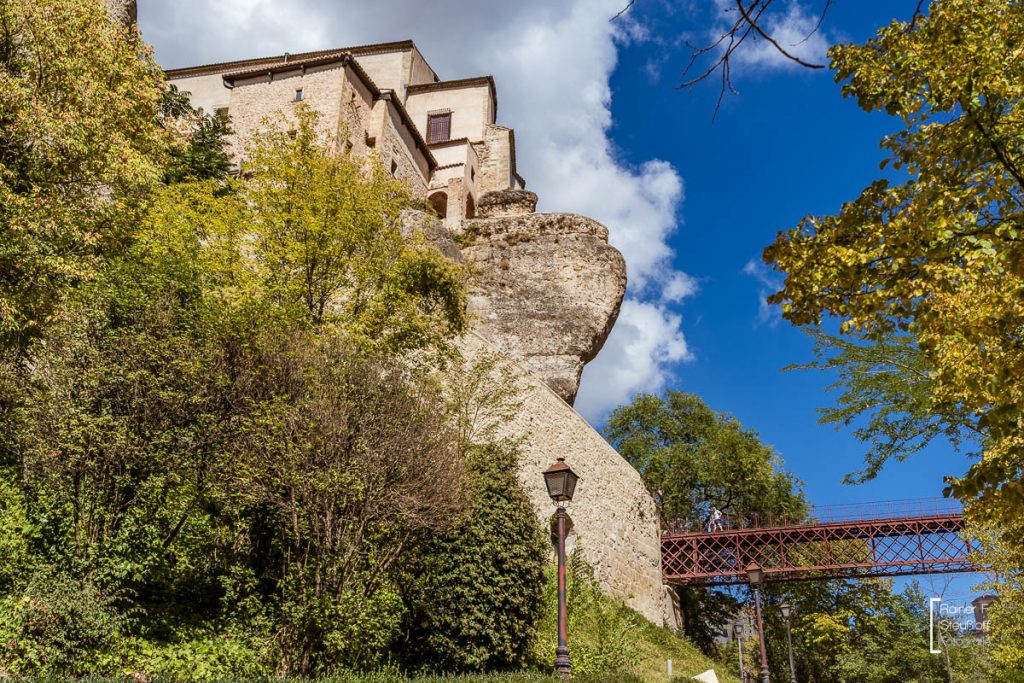
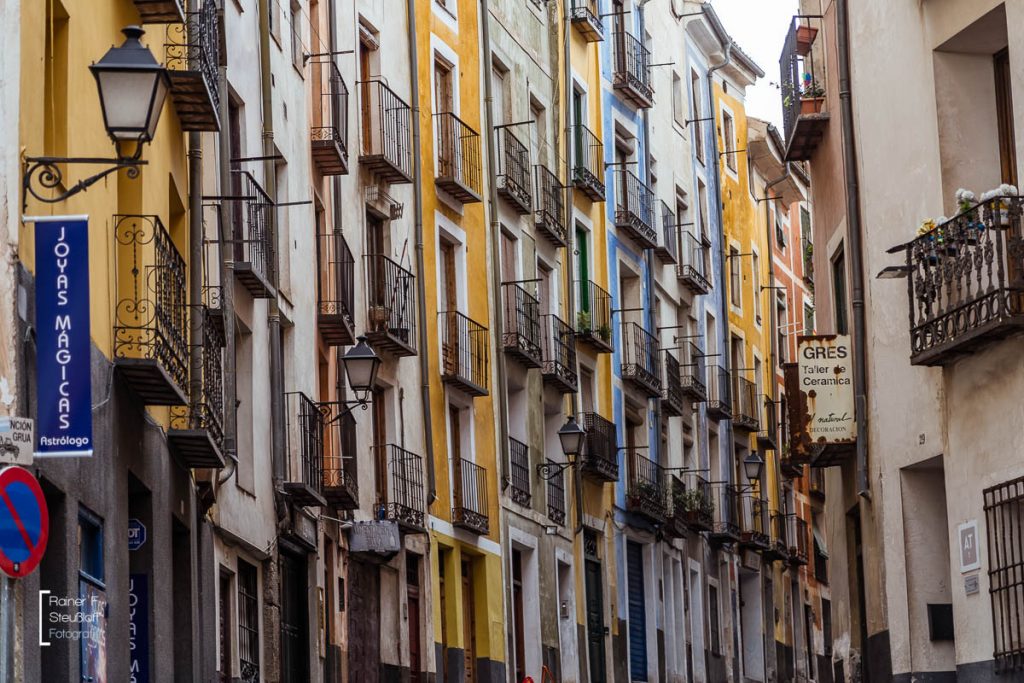
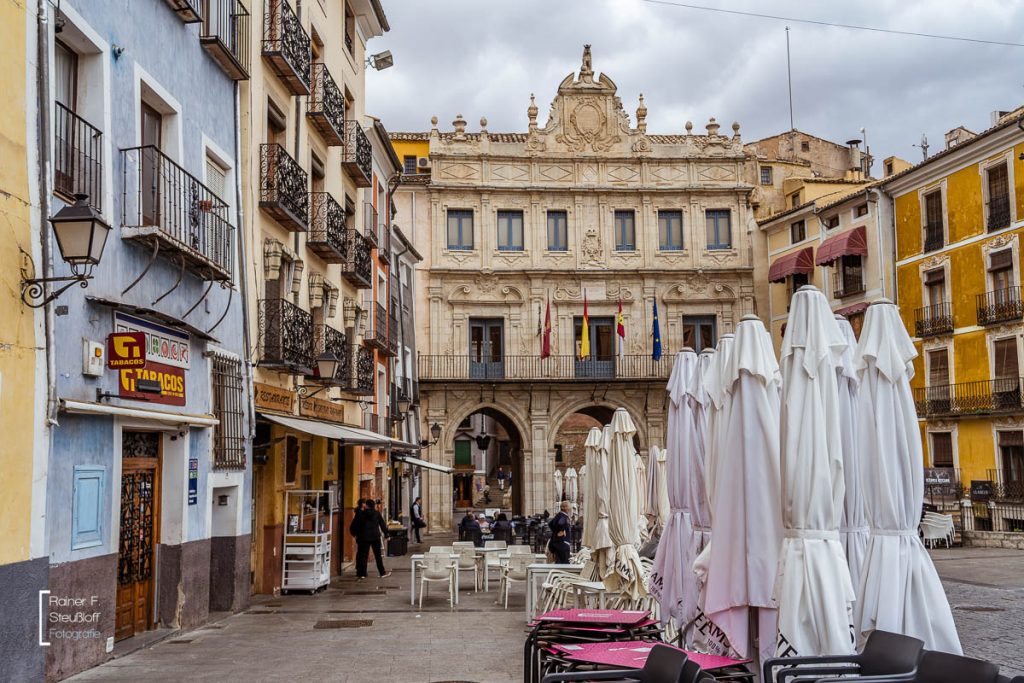
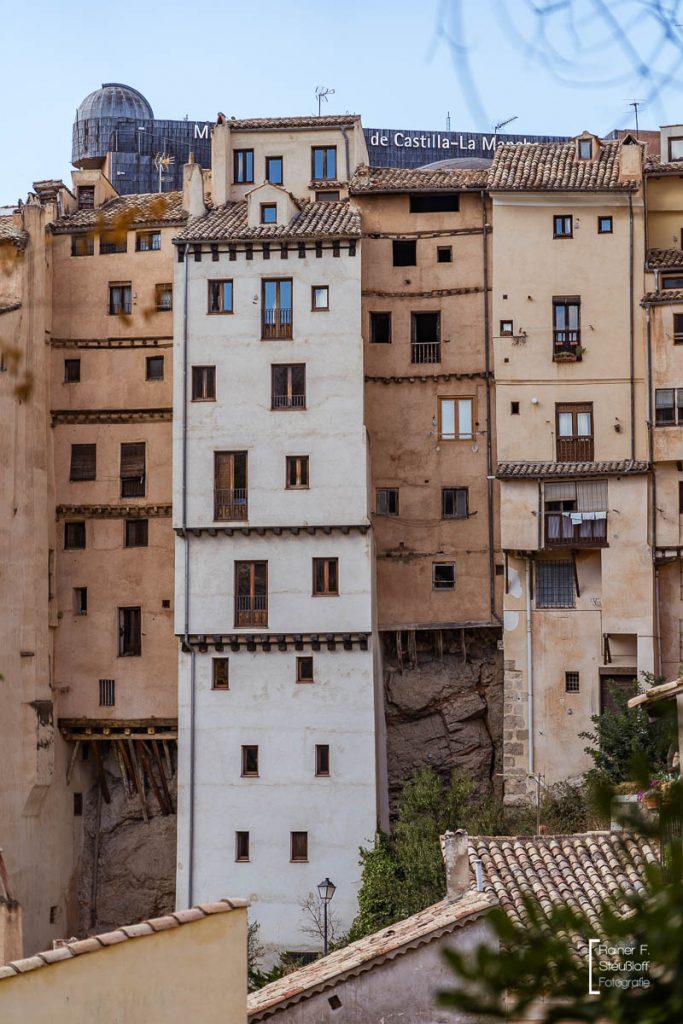
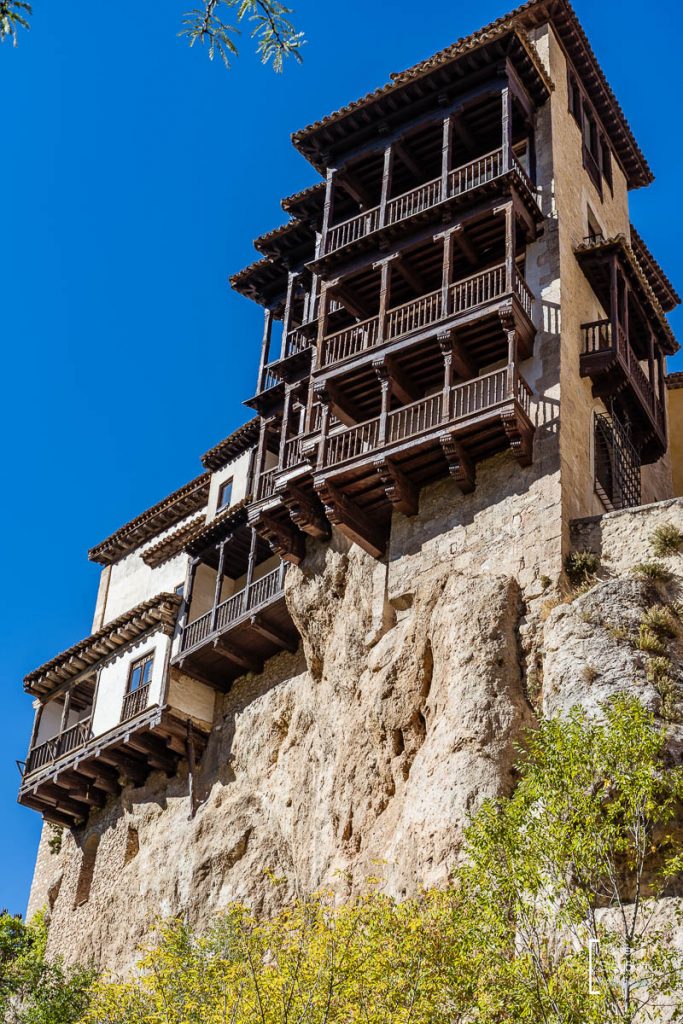
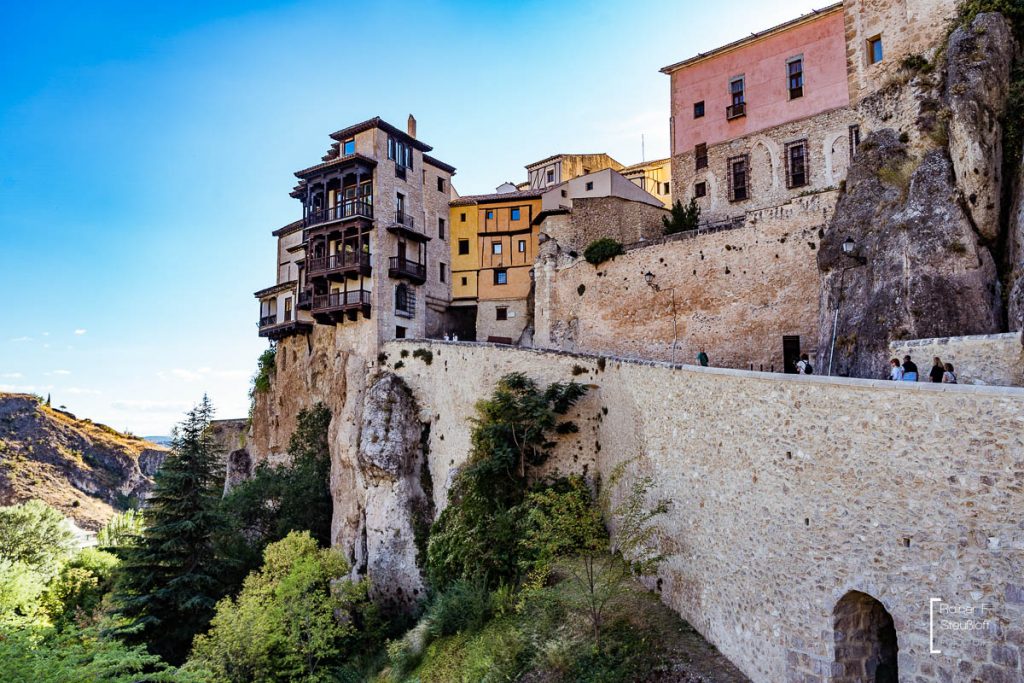
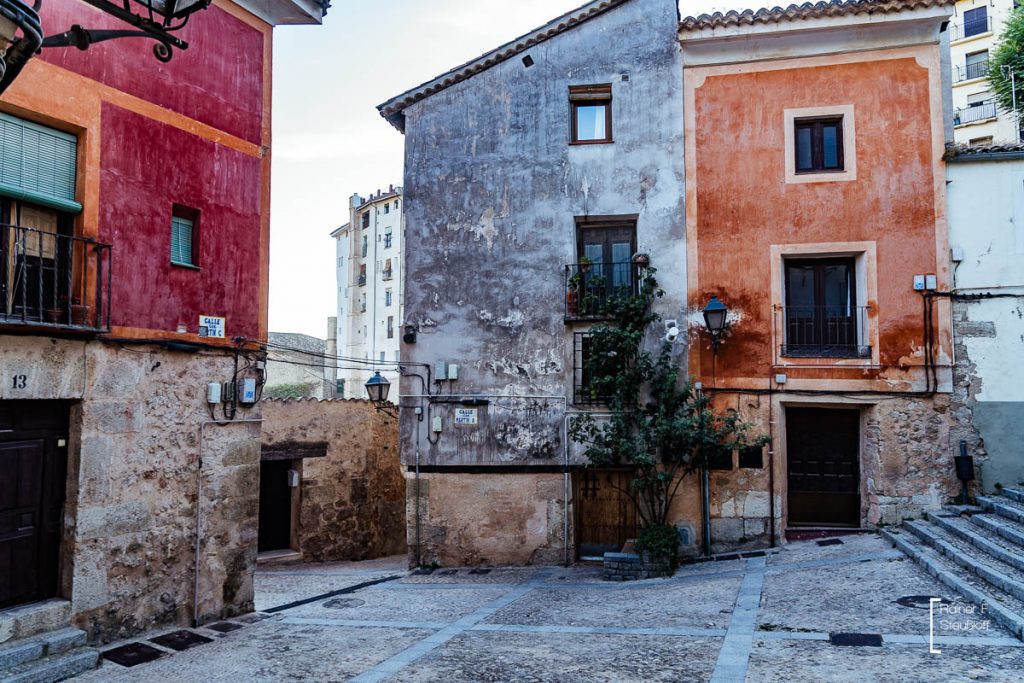
Wer nach unten möchte, kann den Weg vom Aussichtspunkt Mirador del antiguo postigo de Santa Maria Richtung Innenstadt nehmen. Entlang der spektakulären Bauten der Casas Colgadas, die seit 300 Jahren über dem Abgrund hängen, bis zum Flüsschen Huécar. Der Uferweg bietet eine tolle Aussicht auf die hängenden Häuser am Berg. Zurück über die Calle Alfonso VIII. mit ihren bunten Häusern und dem Durchgang unter dem quer stehenden Rathaus.
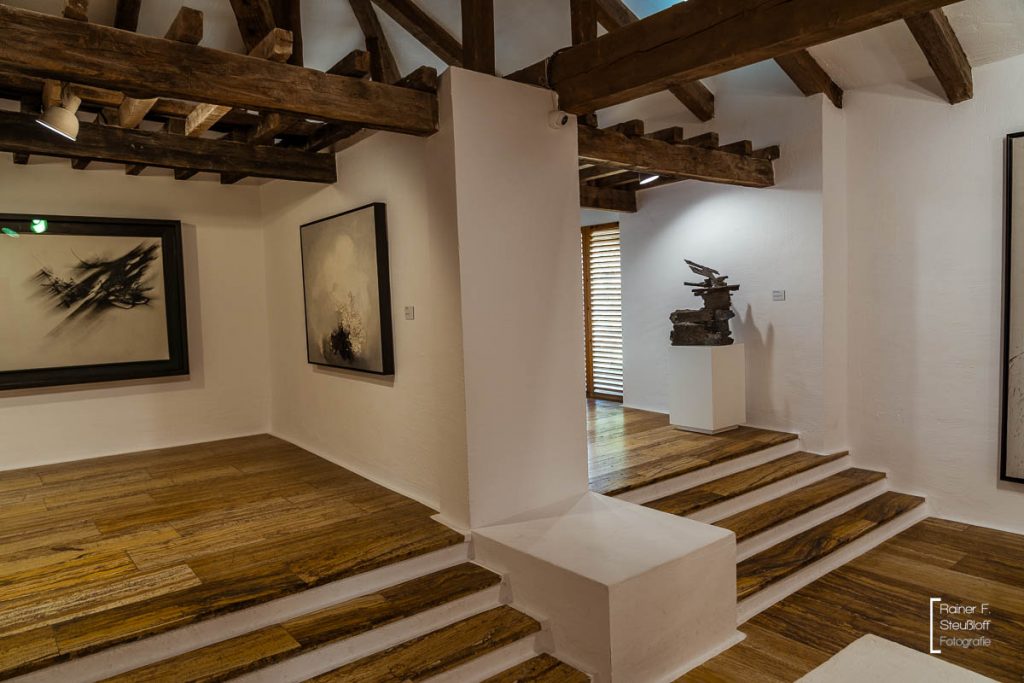
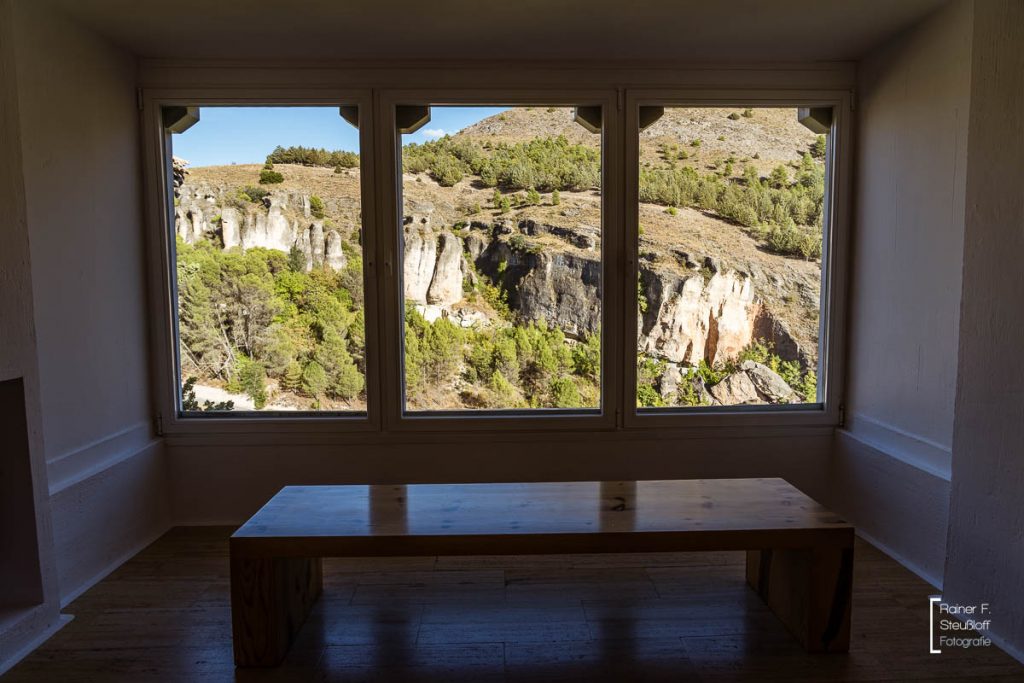
In einem der Hängenden Häuser befindet sich das Museo de Arte Abstracto Español, Fundación Juan March. Es beherbergt eine Sammlung spanischer abstrakter Kunst aus den 50er und 60er Jahre. Von hier ist die Aussicht grandios und der Eintritt kostenlos.
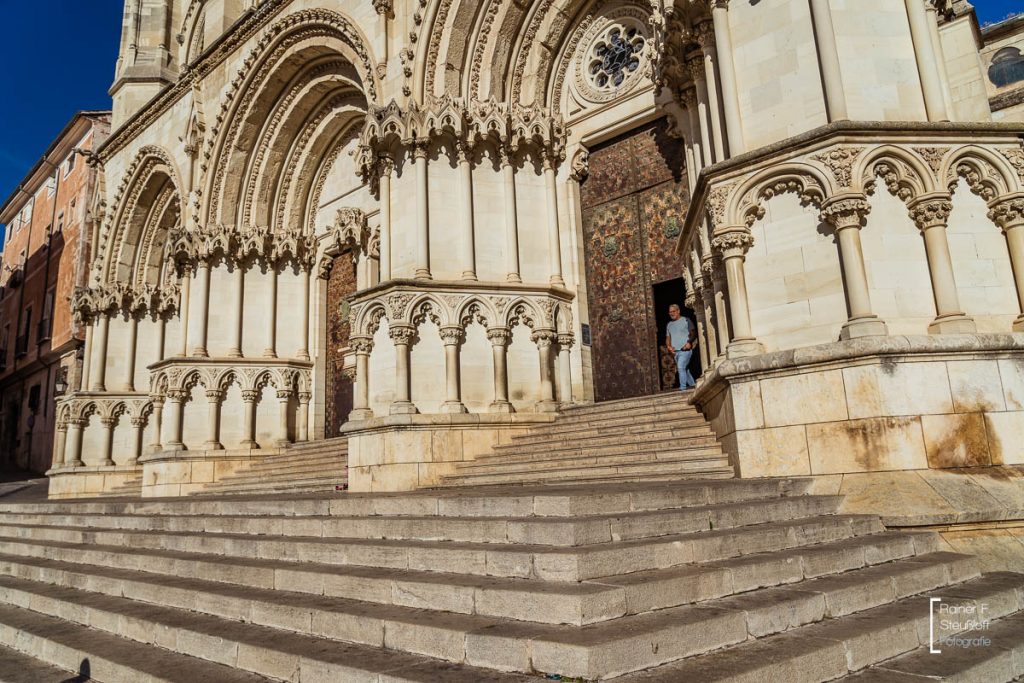
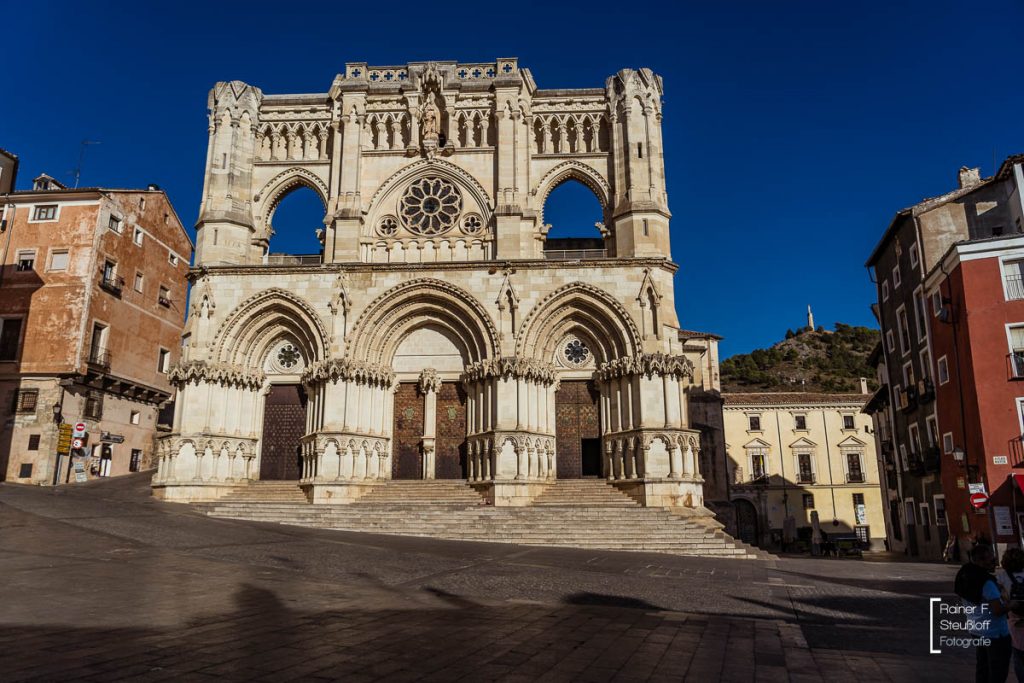
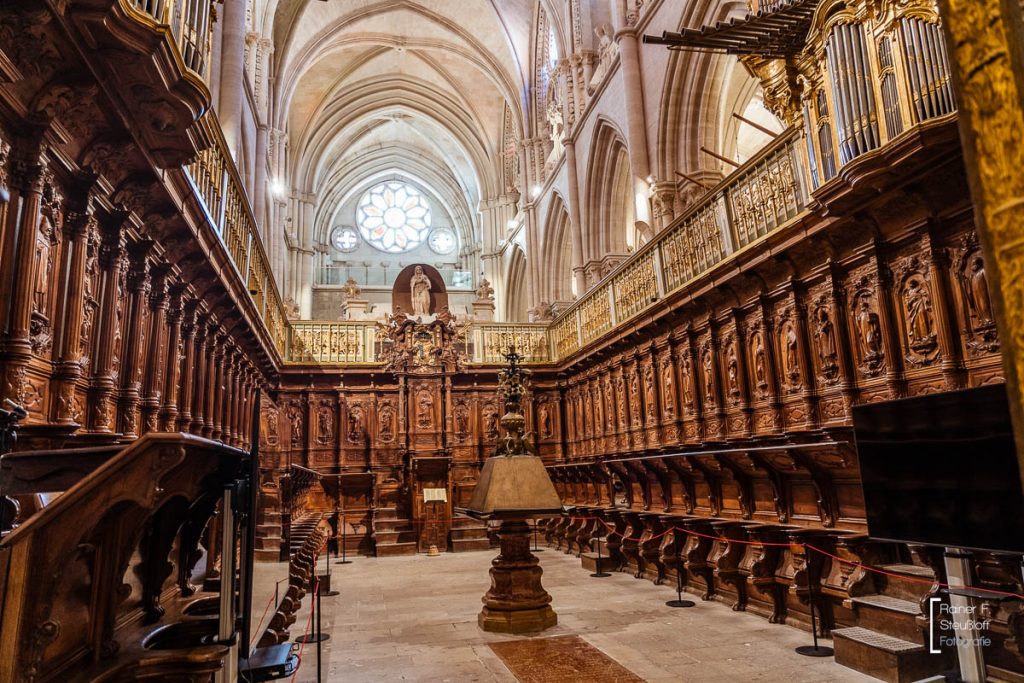
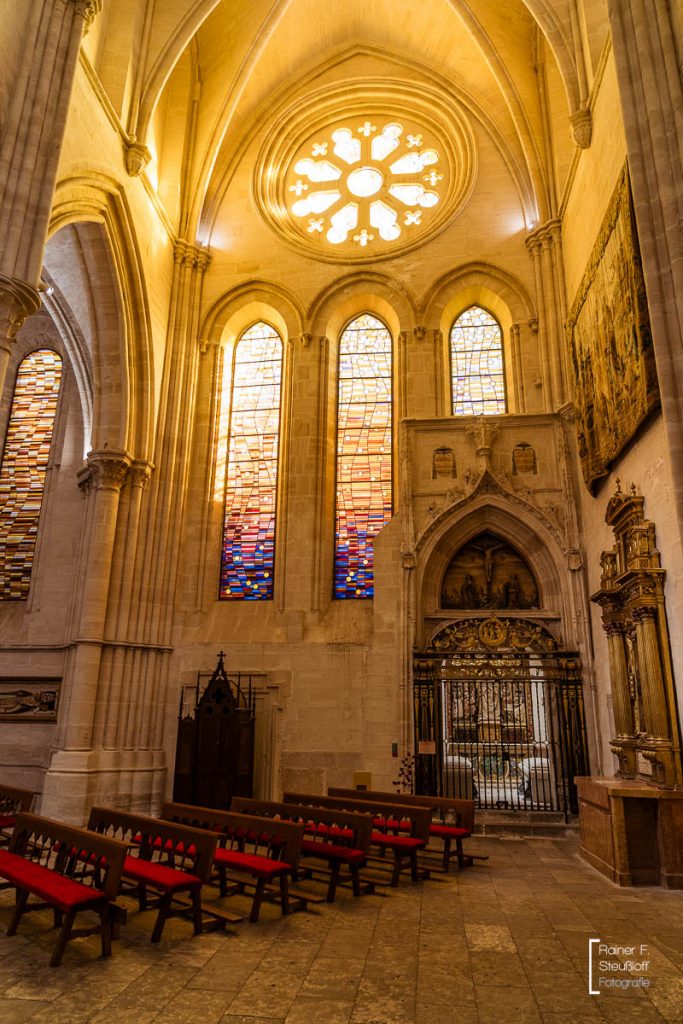
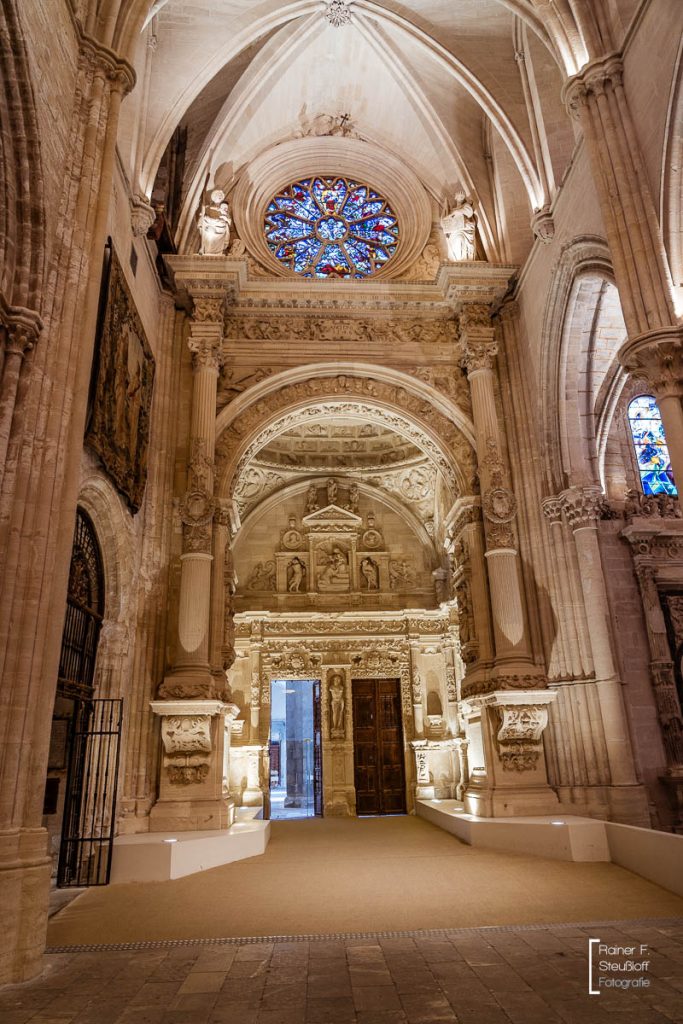
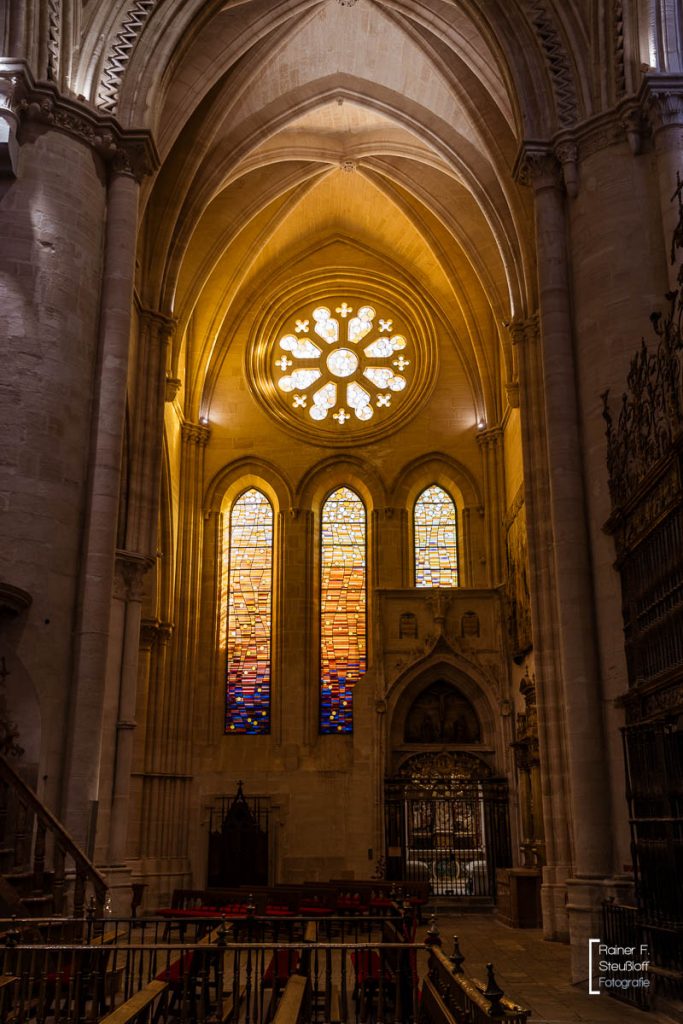
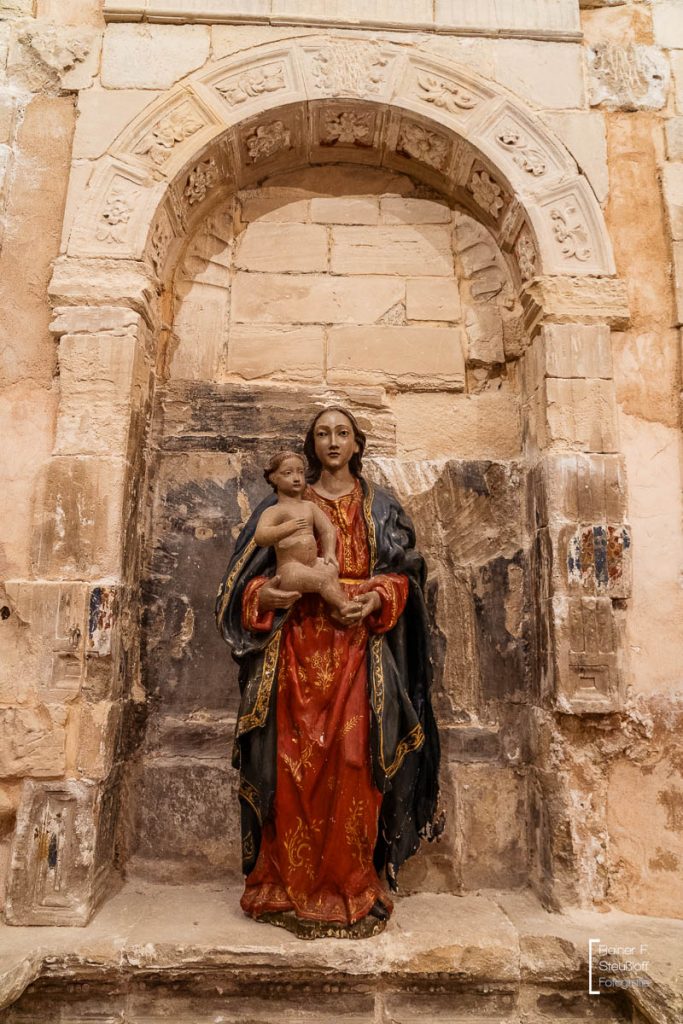
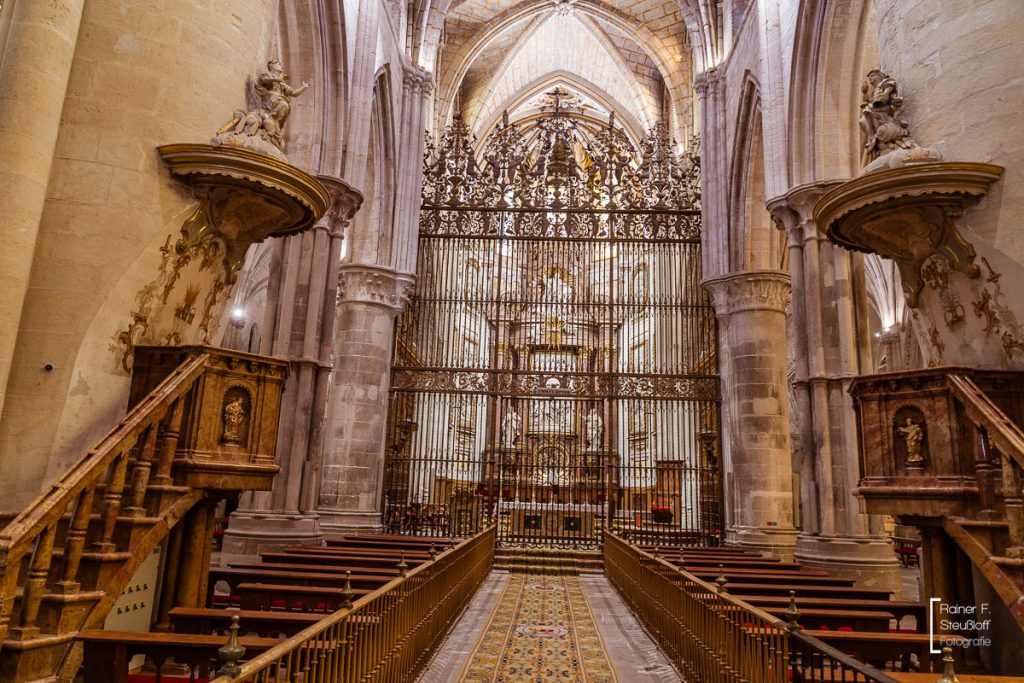
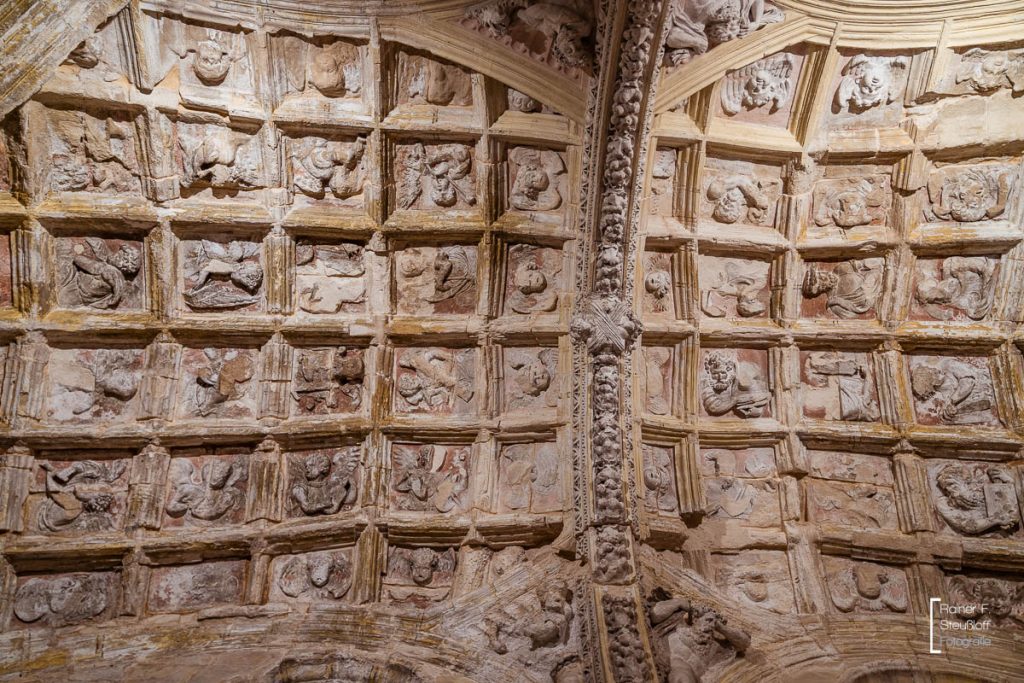
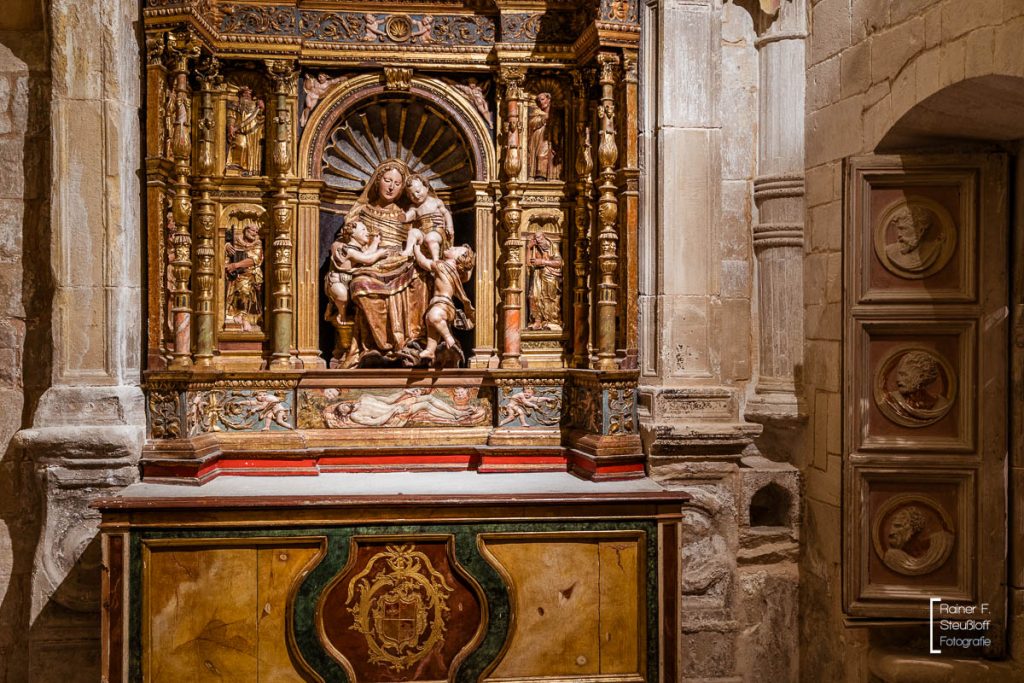
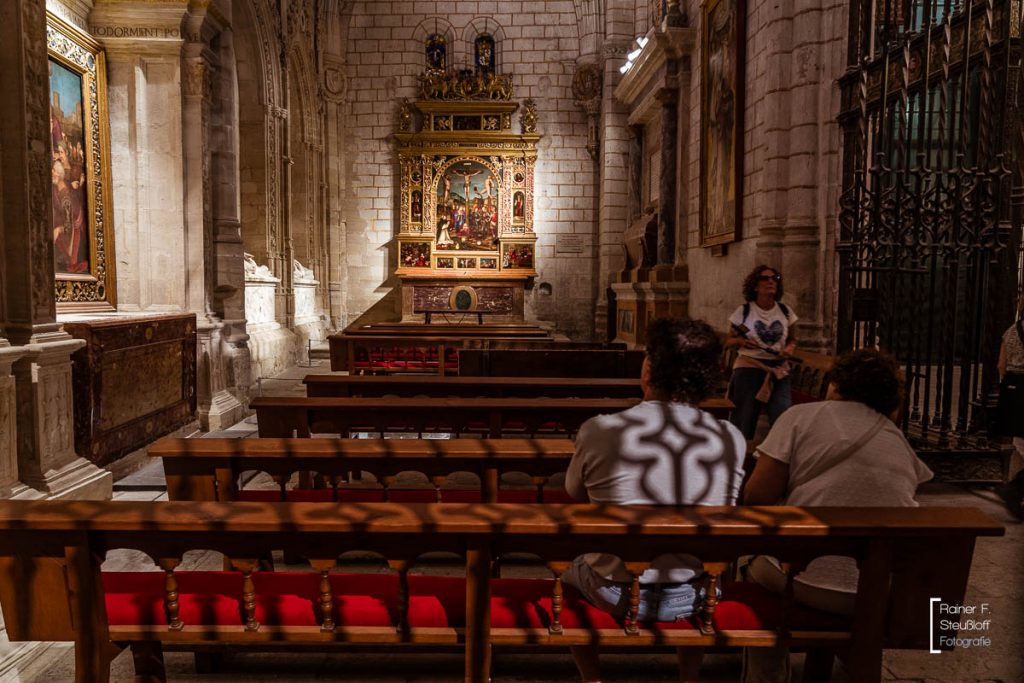
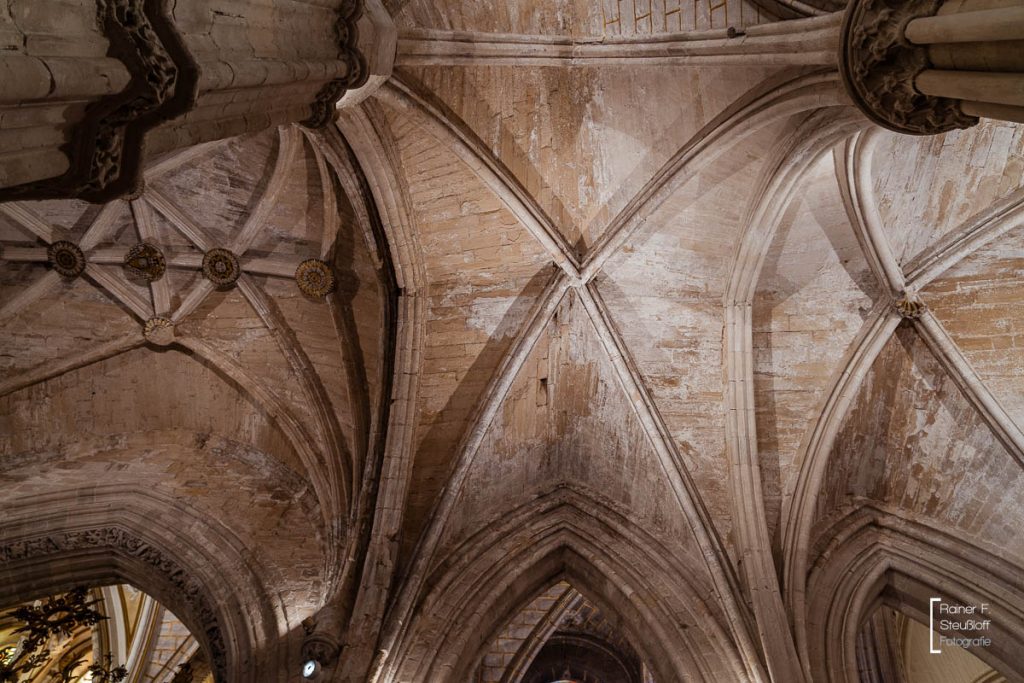
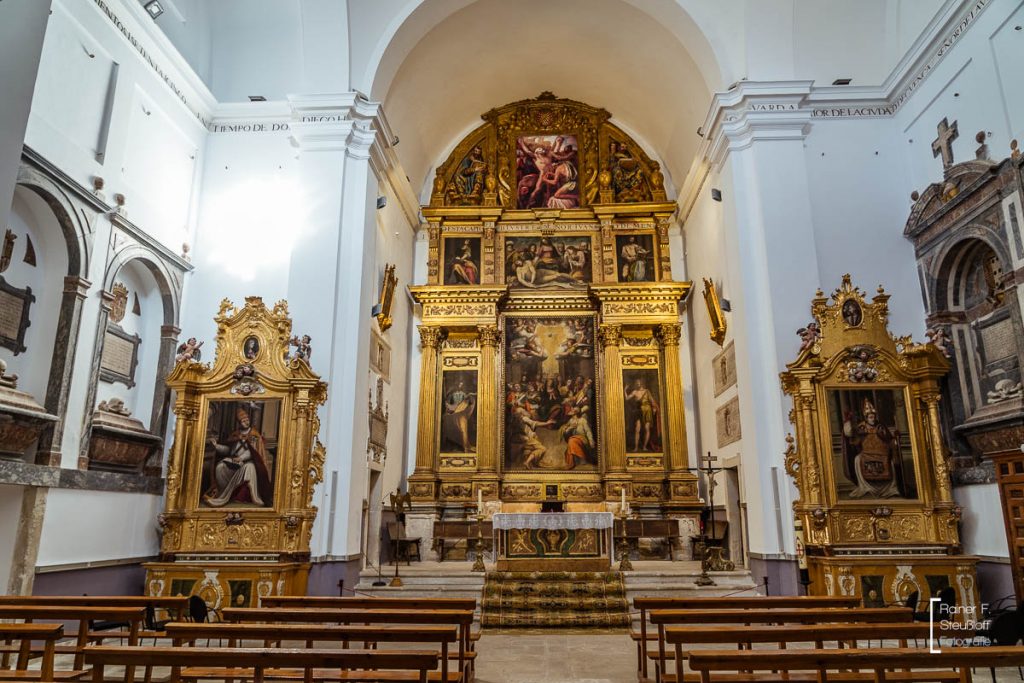
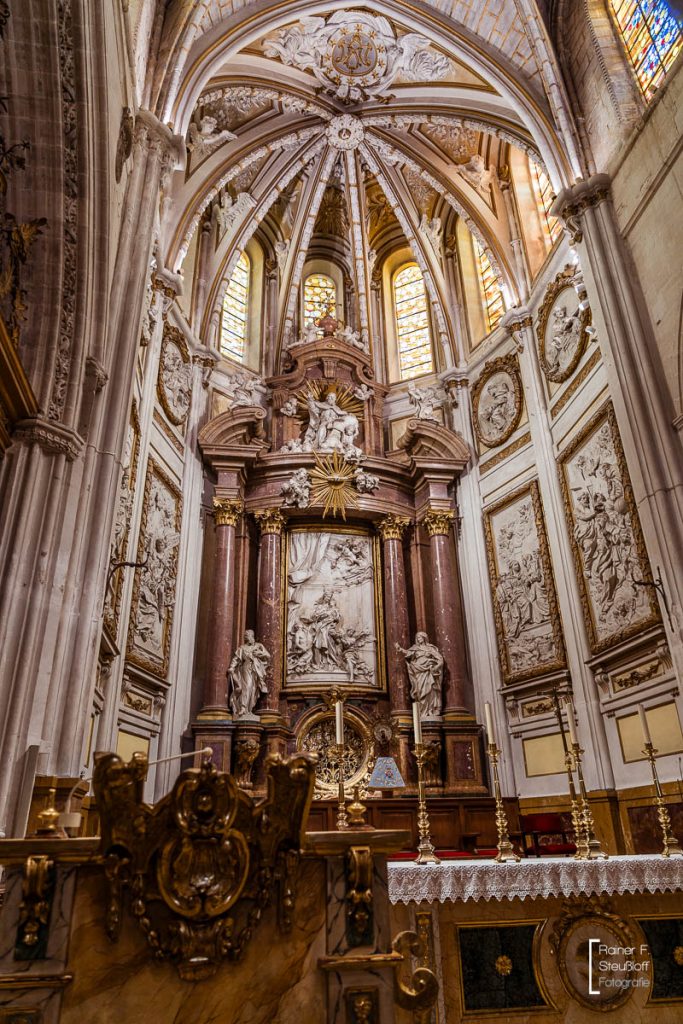
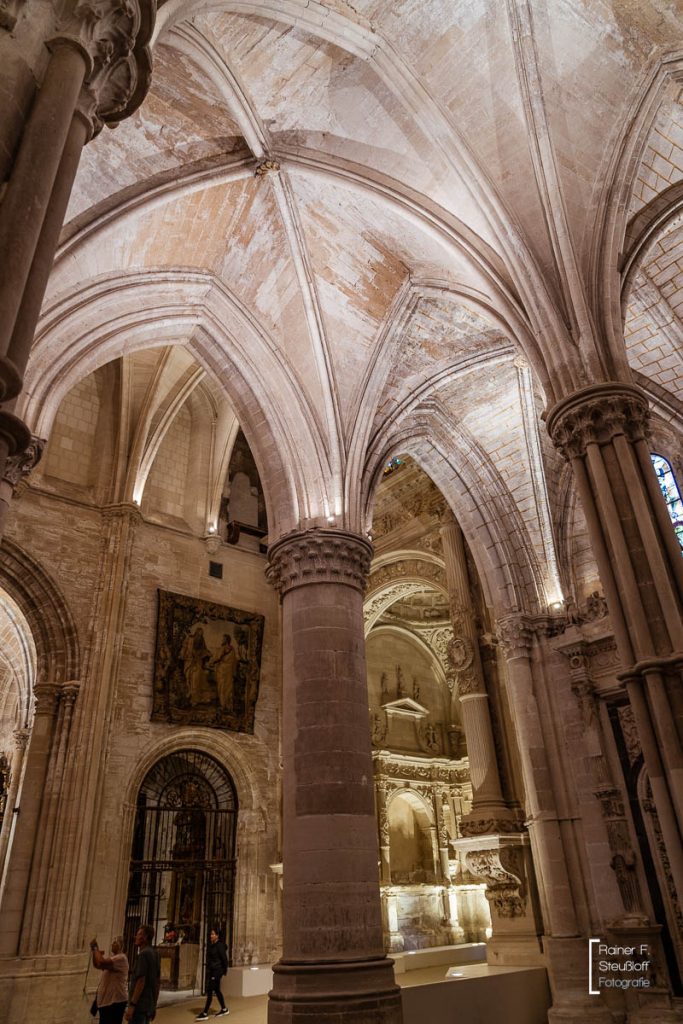
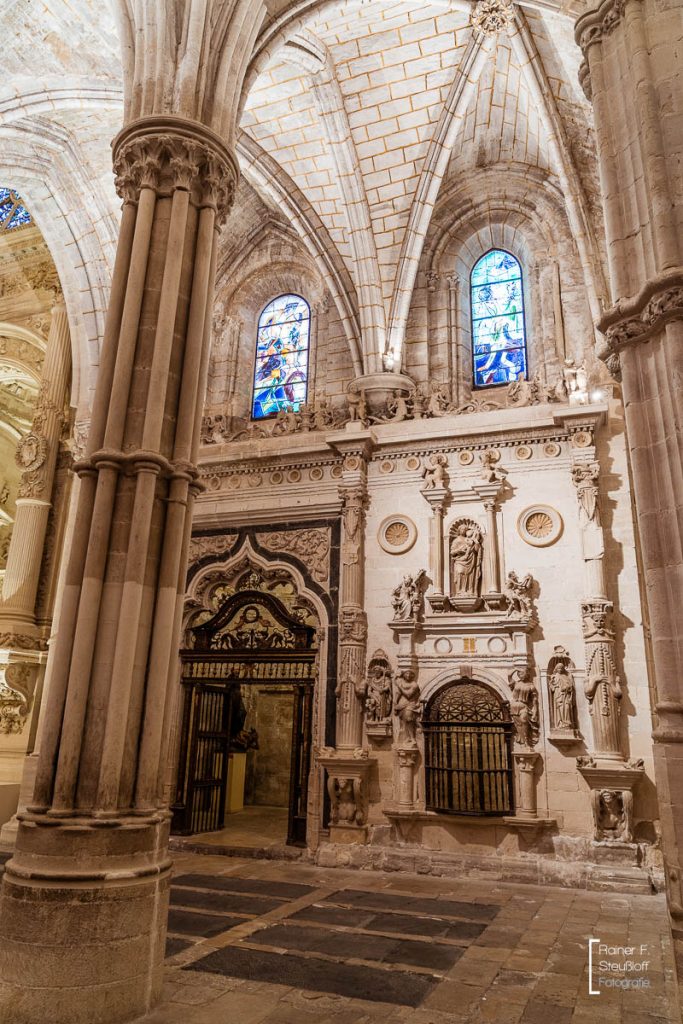
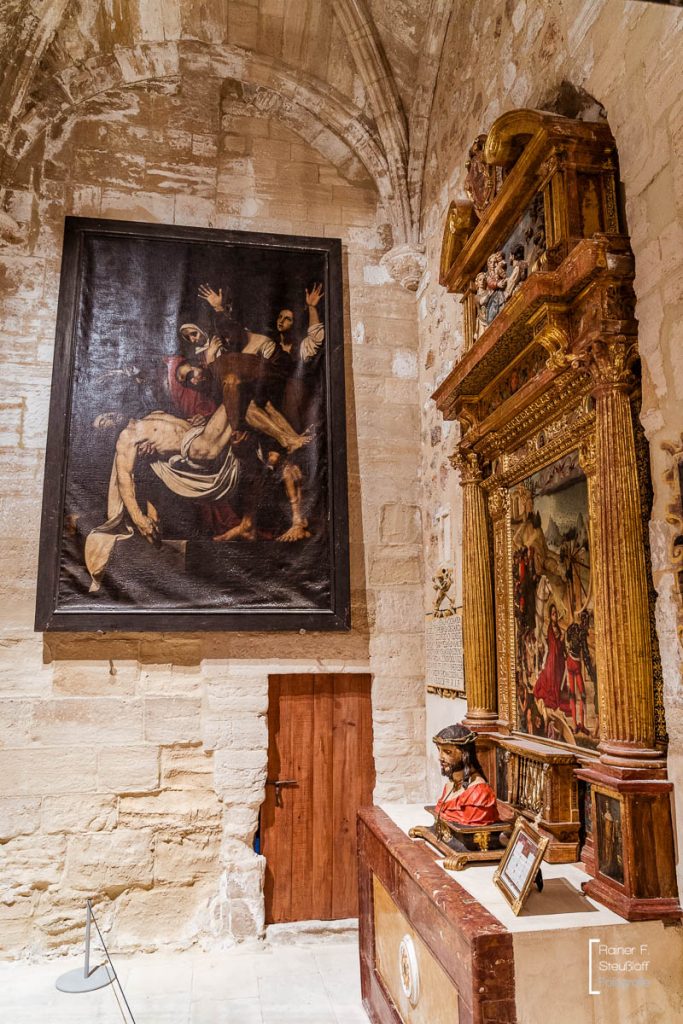
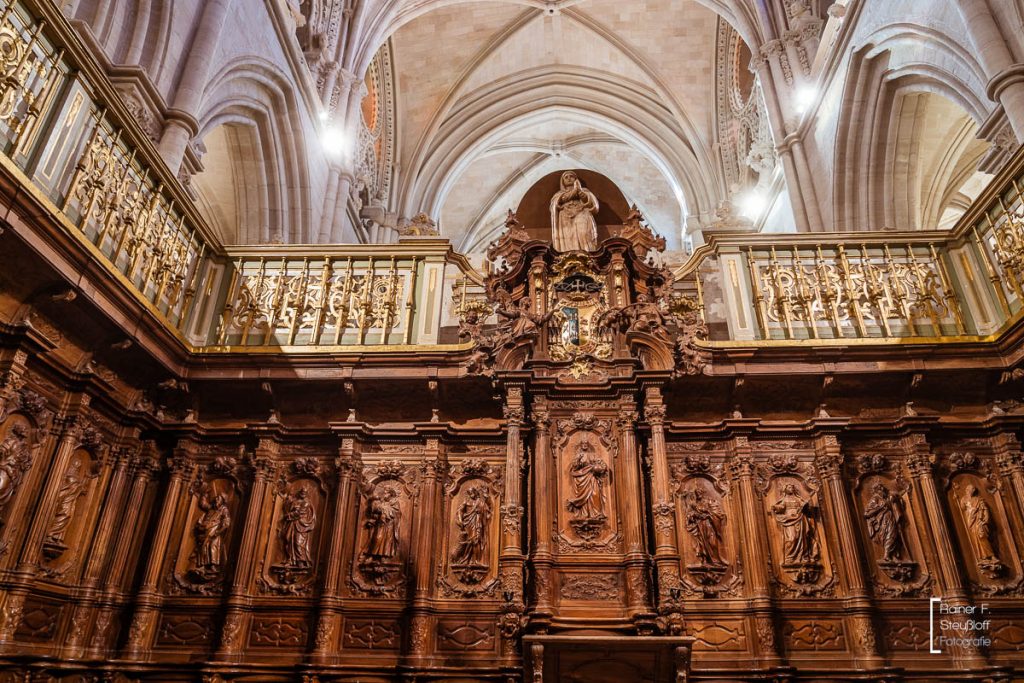
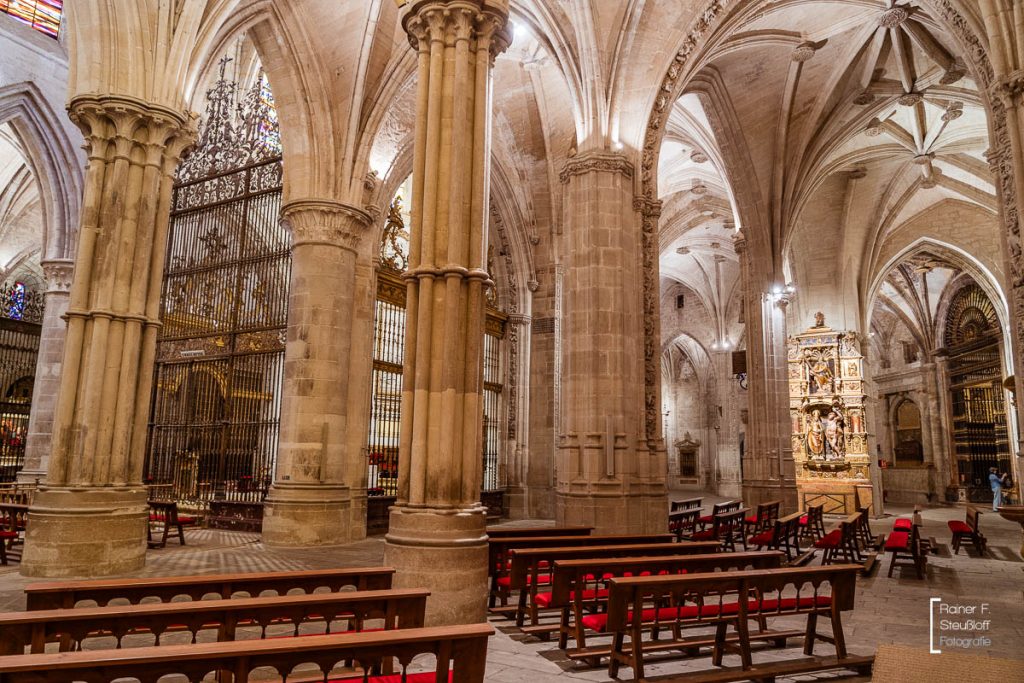
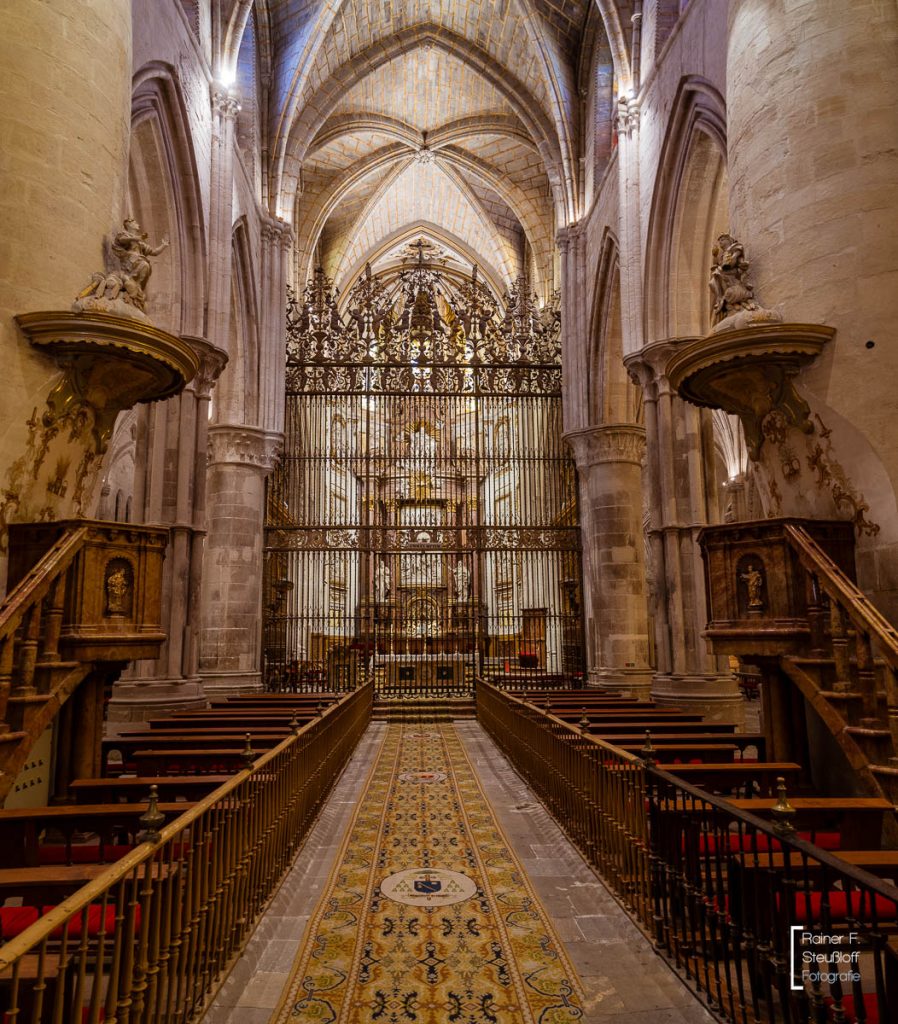
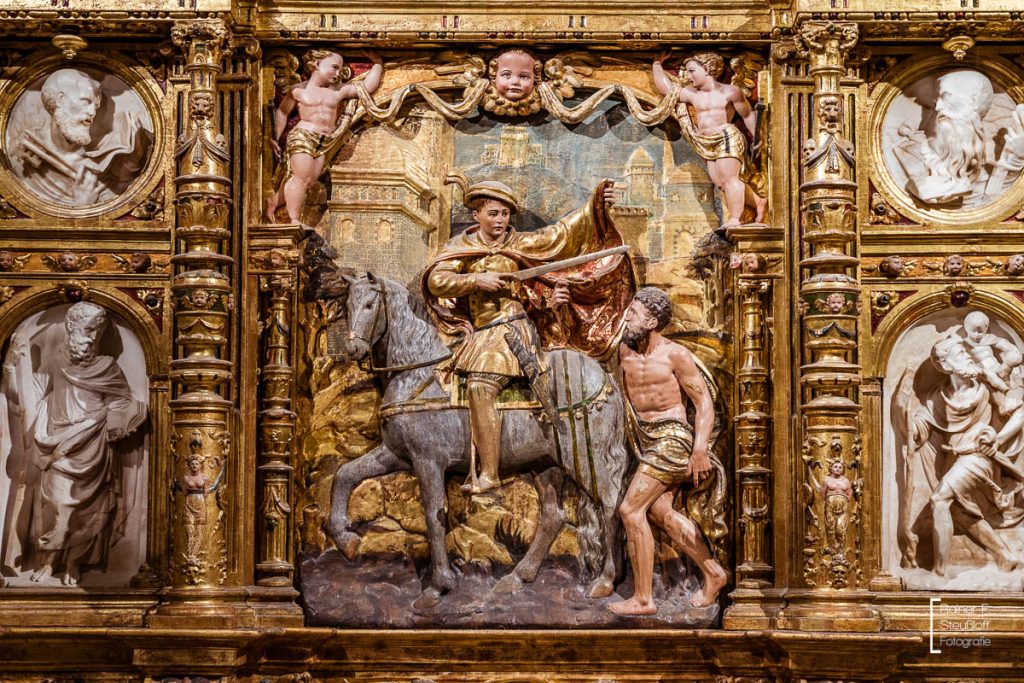
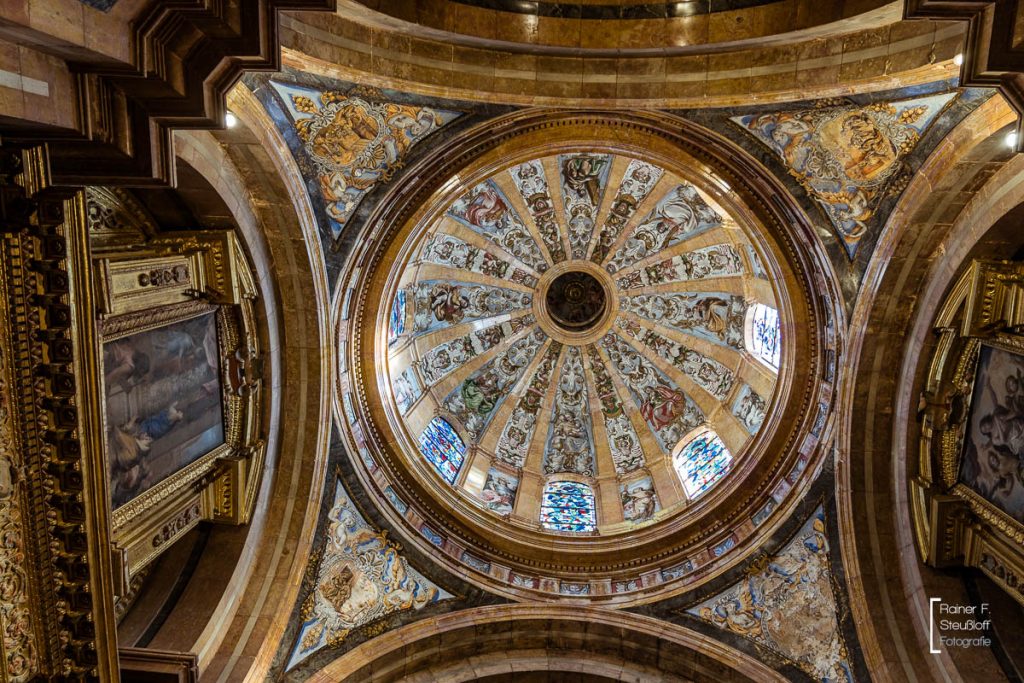
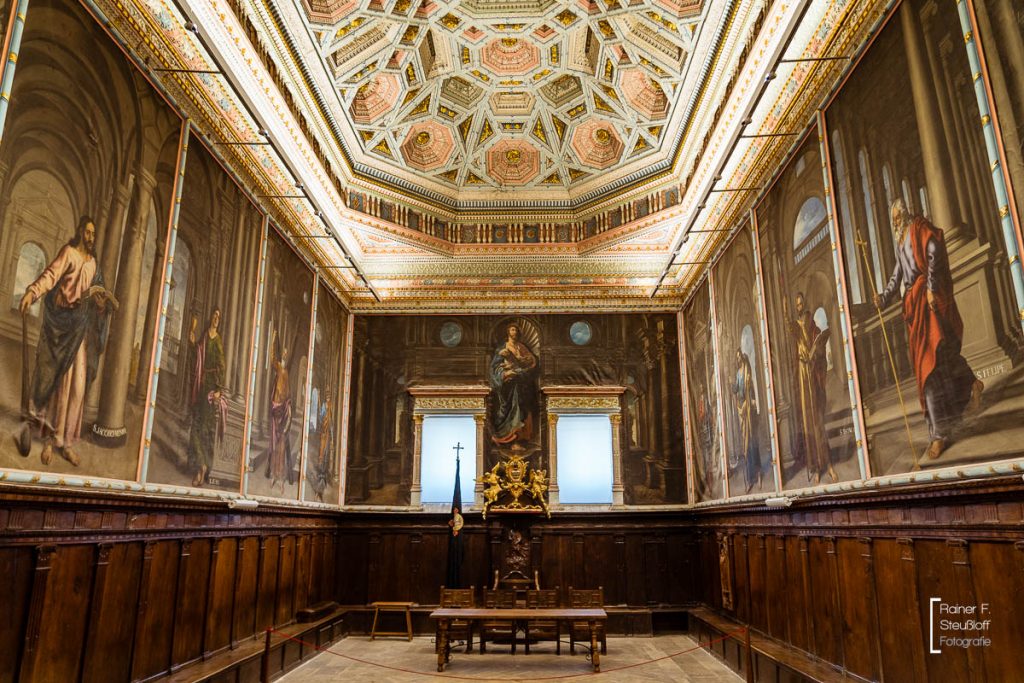
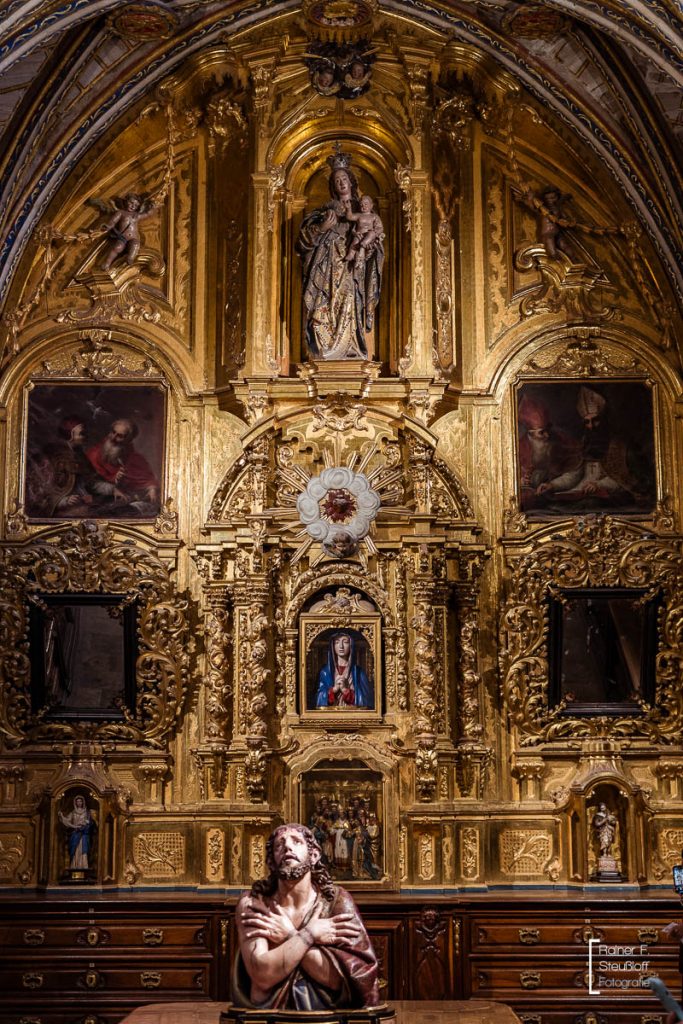
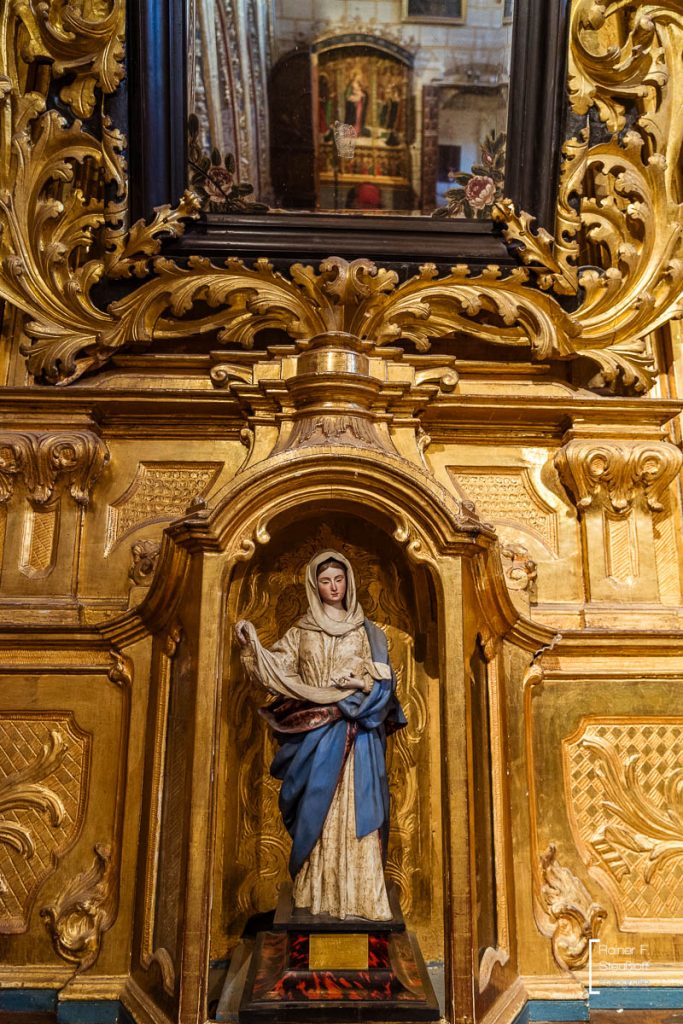
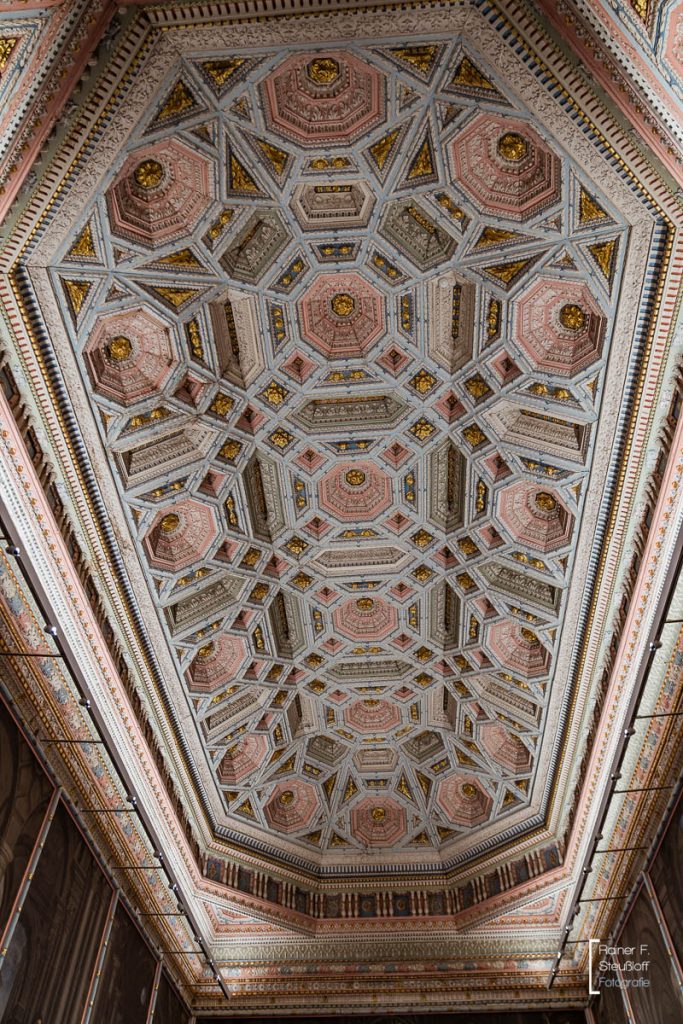
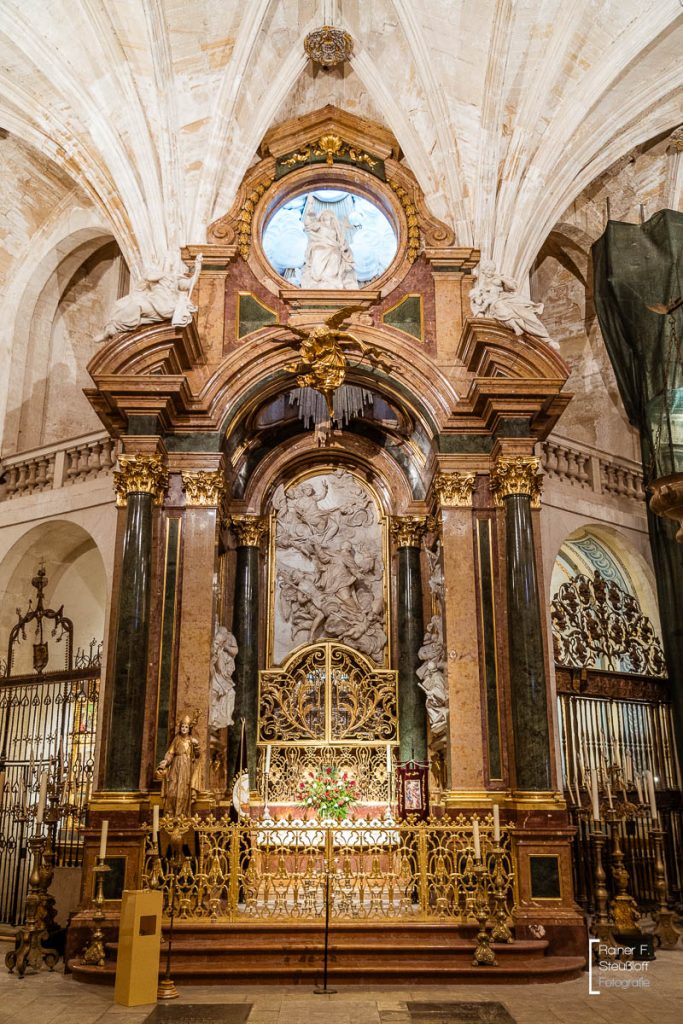
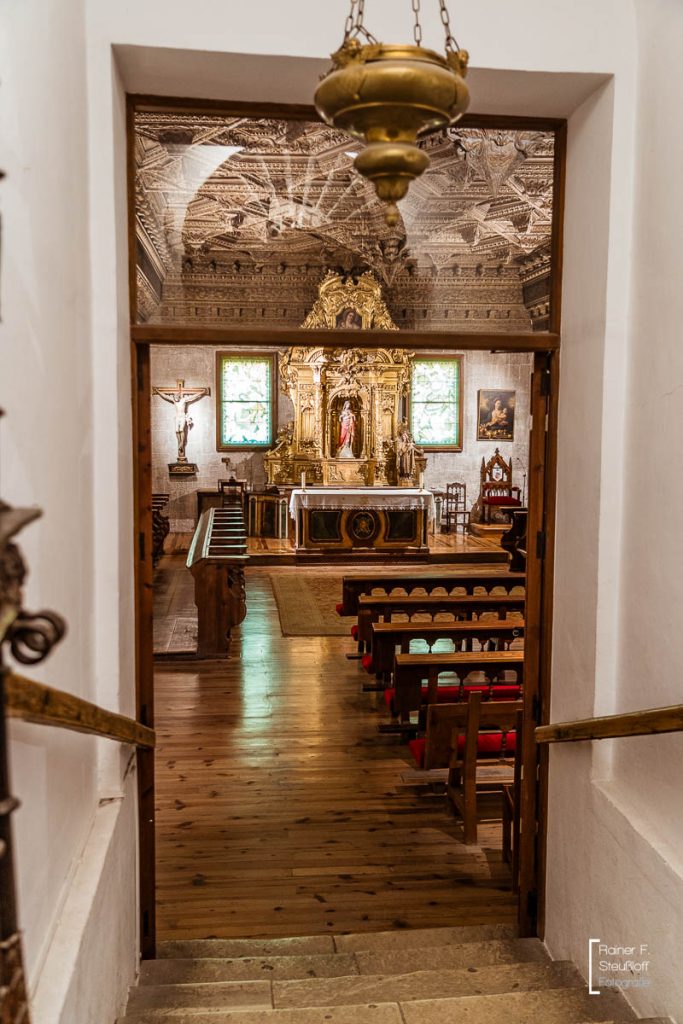
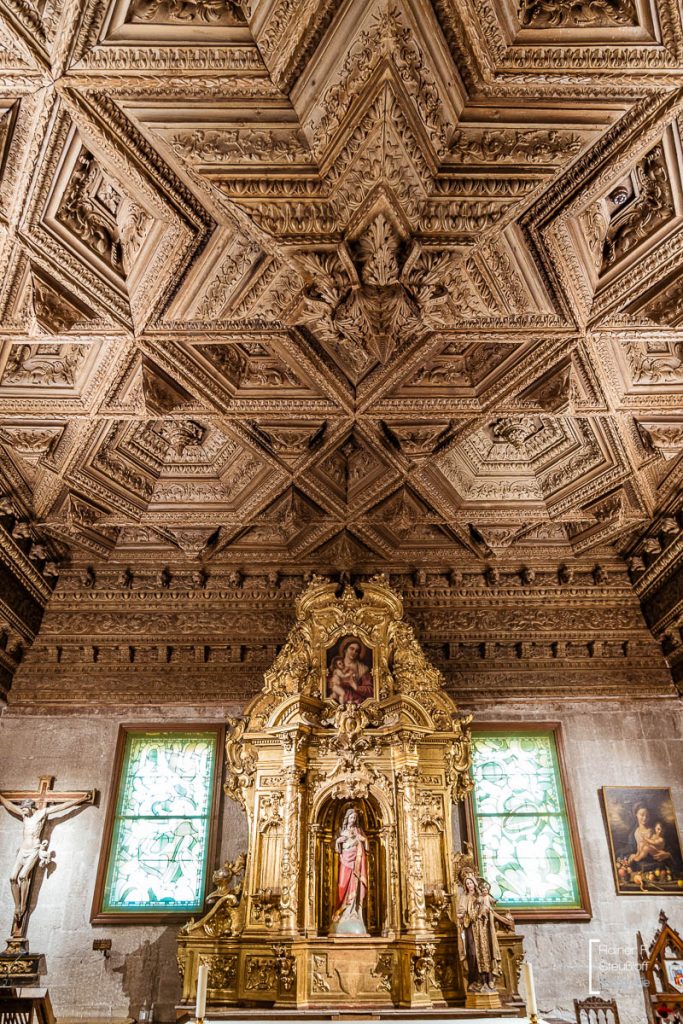
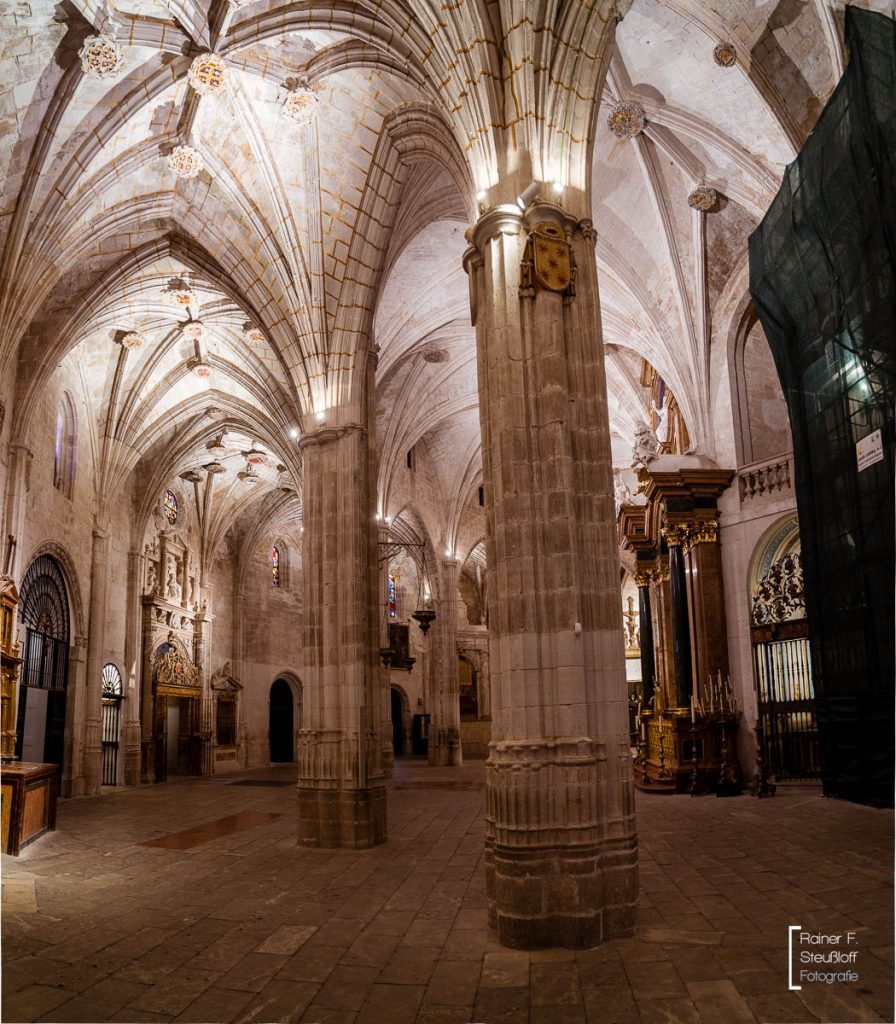
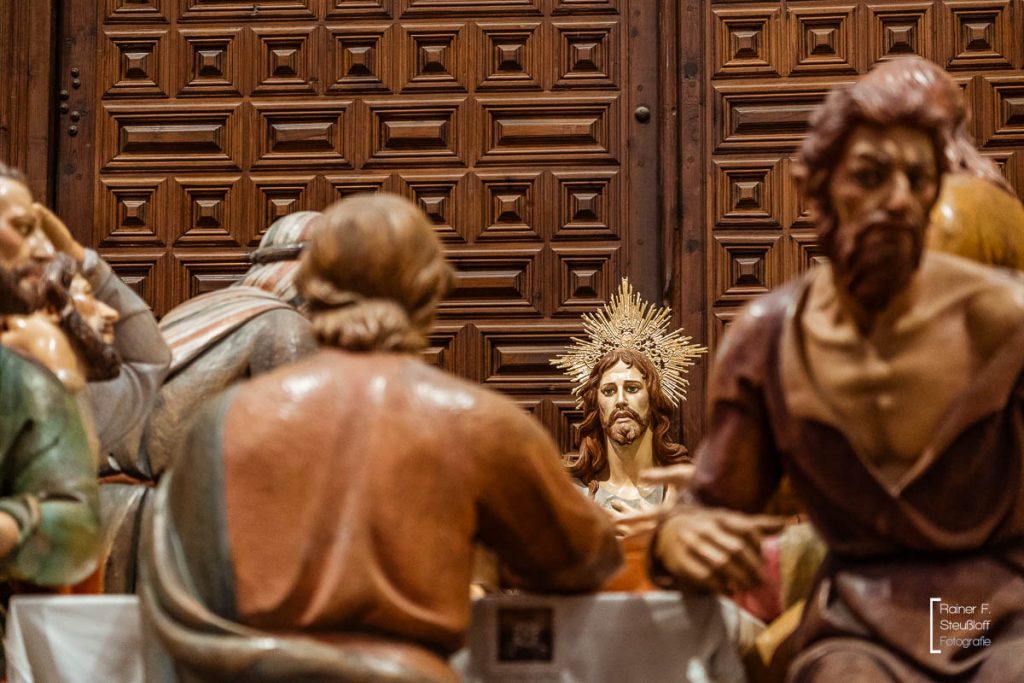
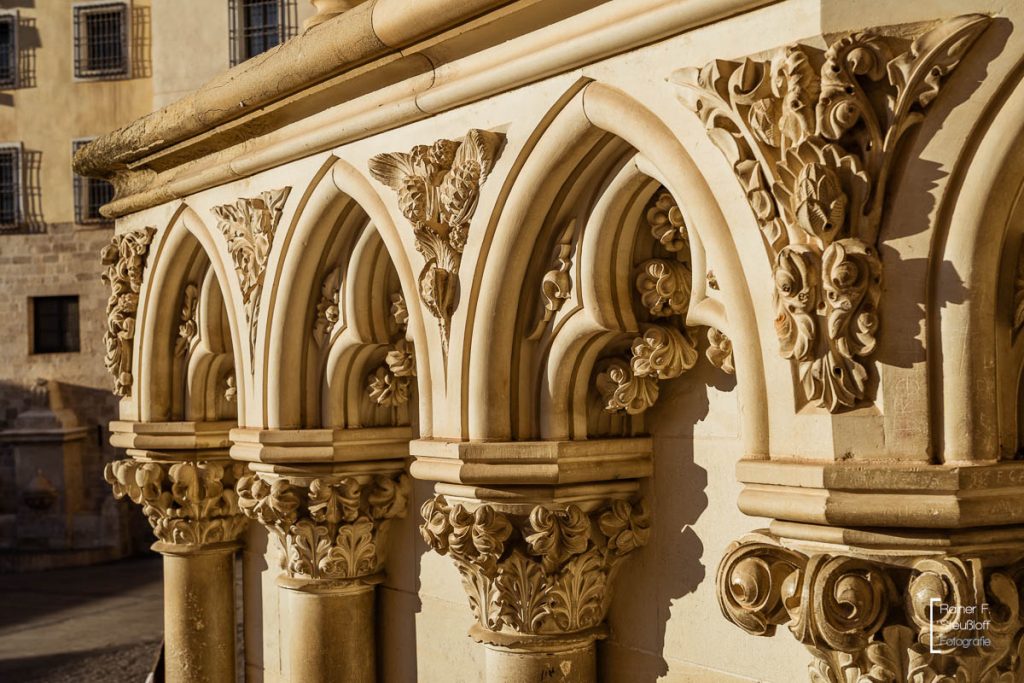
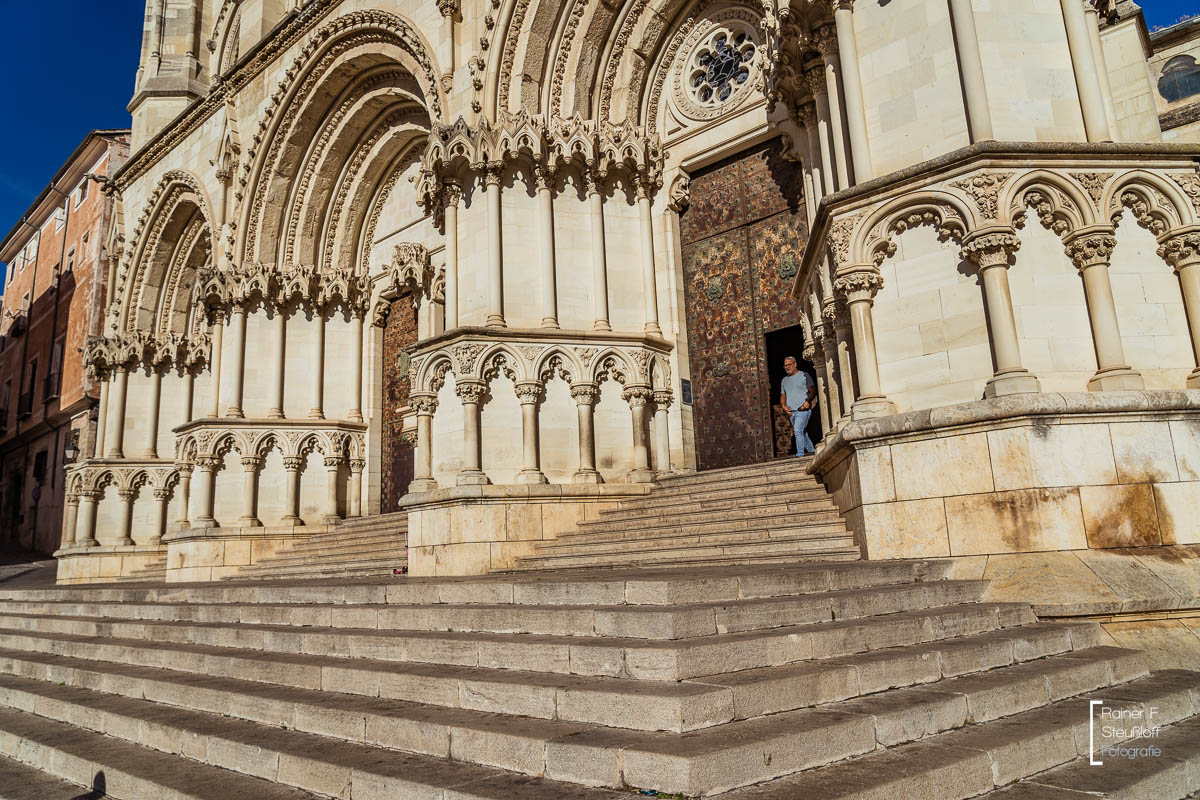
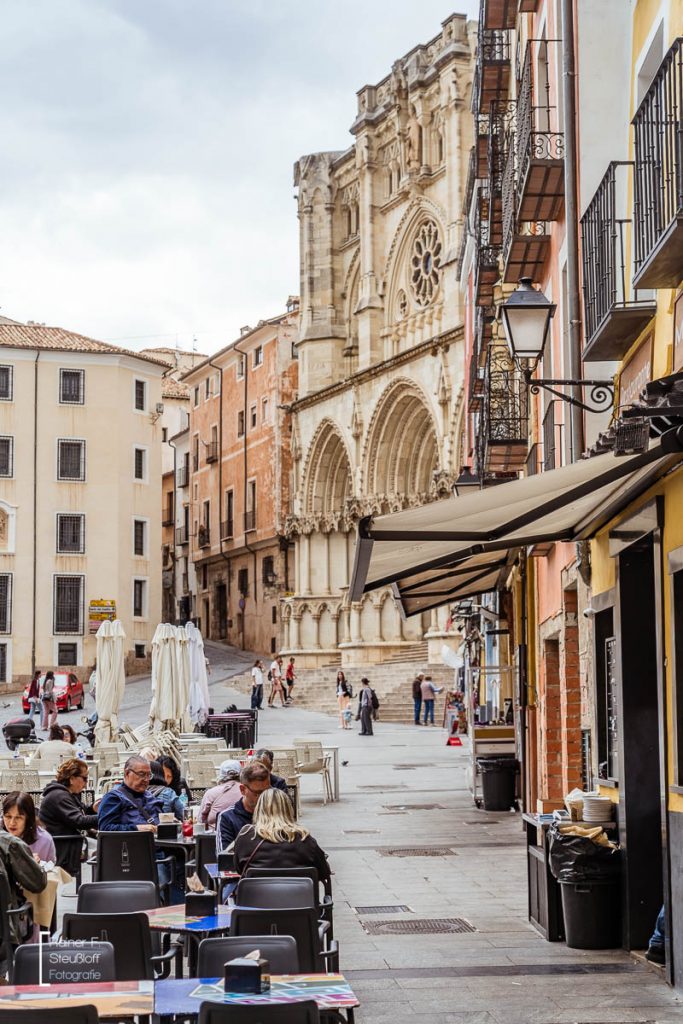
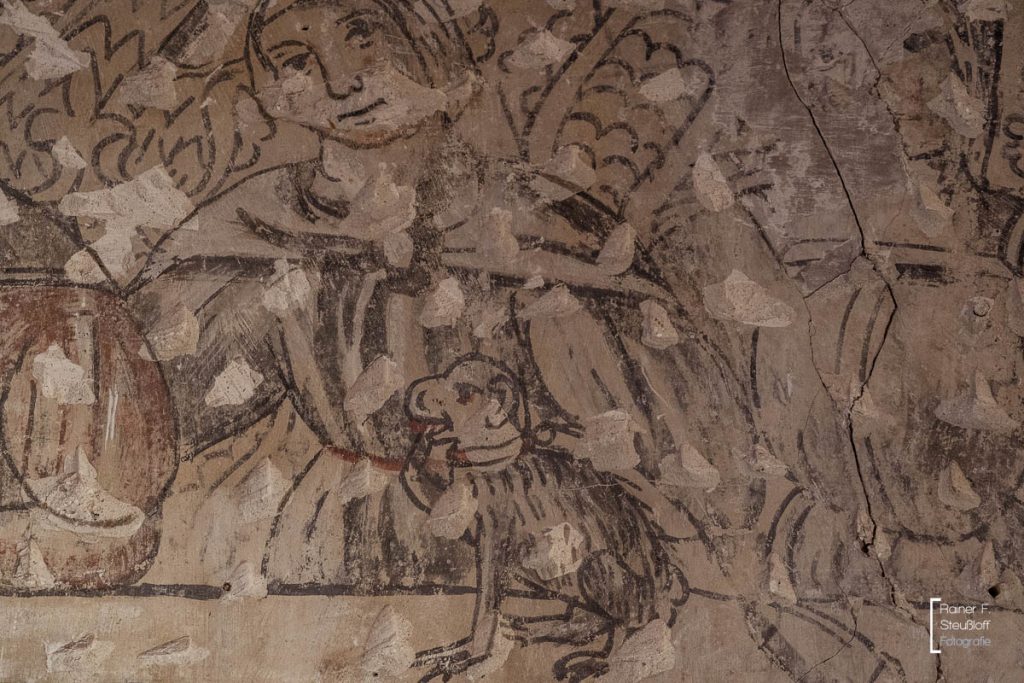
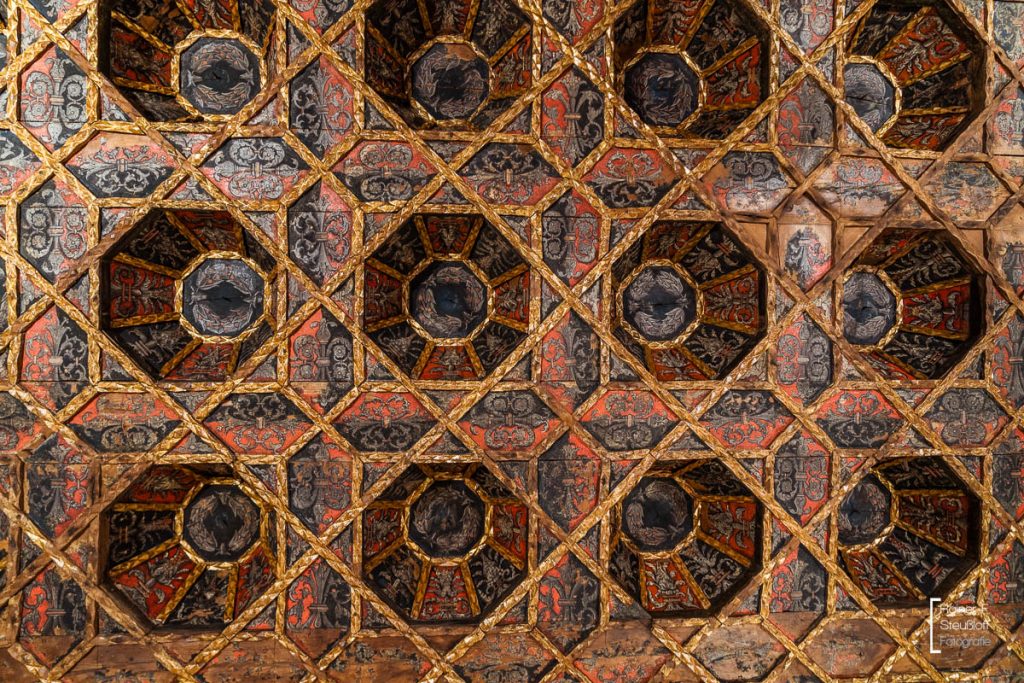
Ein Höhepunkt ist der Besuch der Kathedrale. Sie wirkt etwas derangiert, denn ihr eingefallener Glockenturm wurde nicht wieder aufgebaut. Nach der Rückeroberung von den Mauren begannen im 12. Jahrhundert die Christen mit diesem frühgotische Bau. Mit ein bisschen Glück findet man den Ausgang zum Außenhof mit schöner Aussicht und den angeschlossenen Kreuzgang. Einige Seitenkapellen haben wunderbare Artesonado Decken, in anderen kann man sich vorstellen, wie die Inquisition wütete. Direkt am Eingang steht eine große Figurengruppe, die das letzte Abendmal darstellt. Sie wird bei Prozessionen zu Ostern durch den Ort getragen.
A city on two levels. Below, a modern provincial capital; above, a historic old town with a cathedral and a fortress. If you want to go up, you’d better be a good walker. Countless steep staircases wind through the town. Few narrow streets allow traffic; the Plaza Mayor is neither beautiful nor cozy—it’s full of cars and heavy traffic. If you’ve rented a vacation apartment, you’ll have to be picked up down below. Only residents are allowed to drive into the UNESCO World Heritage Site. Our ancestors didn’t anticipate the needs of the modern age.
The higher you wind your way through the town, the more spectacular the view becomes. Before you lie deep valleys, carved out of the earth over millions of years. A high bridge, the Puente de San Pablo, connects the old town with the former monastery and today’s Parador. Not for the faint of heart. The path leads uphill through the town, along the city wall, to the castle and the city gate into the newer part of town.
Those who wish to go downhill can take the path from the Mirador del antiguo postigo de Santa Maria viewpoint toward the city center. Passing the spectacular Casas Colgadas, which have hung over the abyss for 300 years, all the way to the Huécar River. The riverside path offers a great view of the hanging houses on the mountain. Return via Calle Alfonso VIII with its colorful houses and the passageway under the crosswise-standing town hall.
One of the hanging houses is home to the Museo de Arte Abstracto Español, Fundación Juan March. It houses a collection of Spanish abstract art from the 1950s and 1960s. From here, the view is magnificent and admission is free.
A highlight is a visit to the cathedral. It looks somewhat disheveled, as its collapsed bell tower was never rebuilt. After the reconquest from the Moors, the Christians began construction of this early Gothic building in the 12th century. With a bit of luck, you’ll find the exit to the outer courtyard with its beautiful view and the adjoining cloister. Some side chapels have wonderful artesonado ceilings; in others, you can imagine how the Inquisition raged. Right at the entrance stands a large group of figures depicting the Last Supper. It is carried through the town during Easter processions.
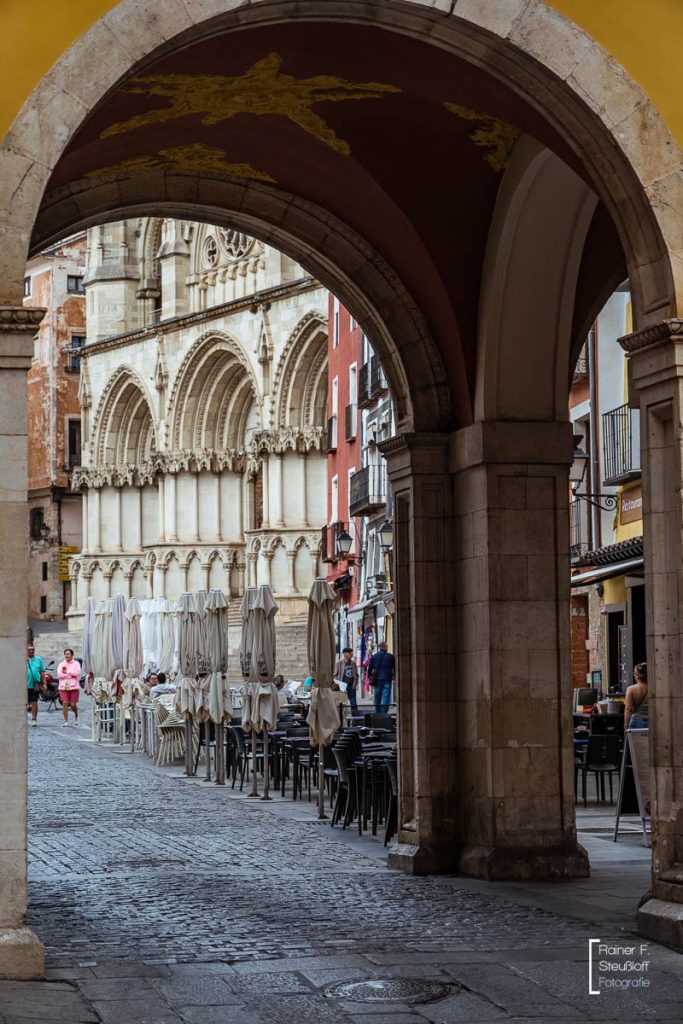
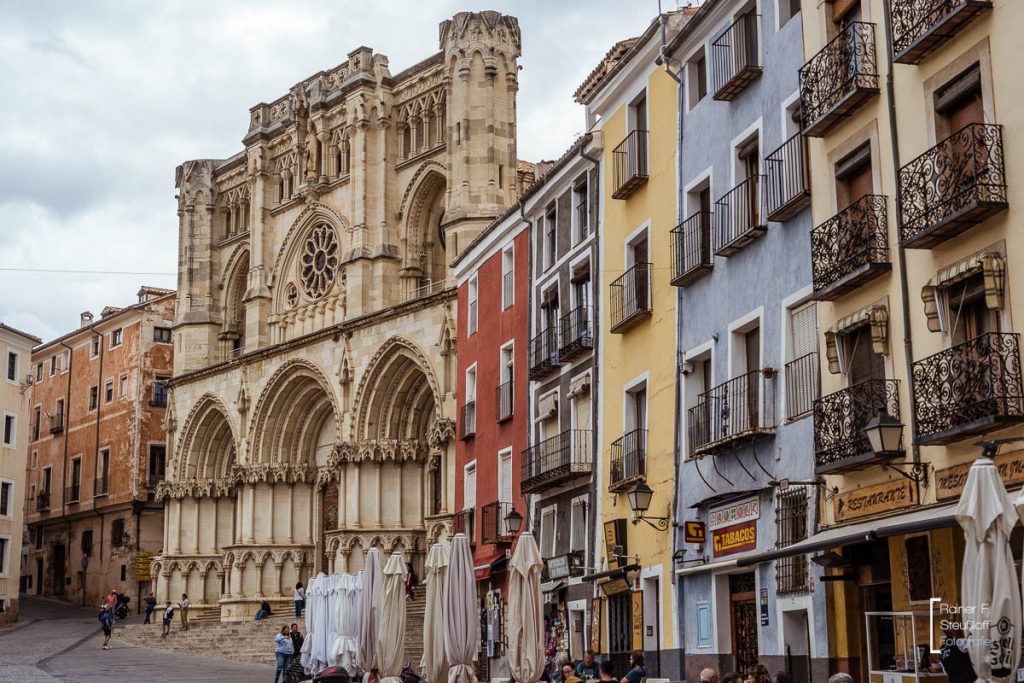
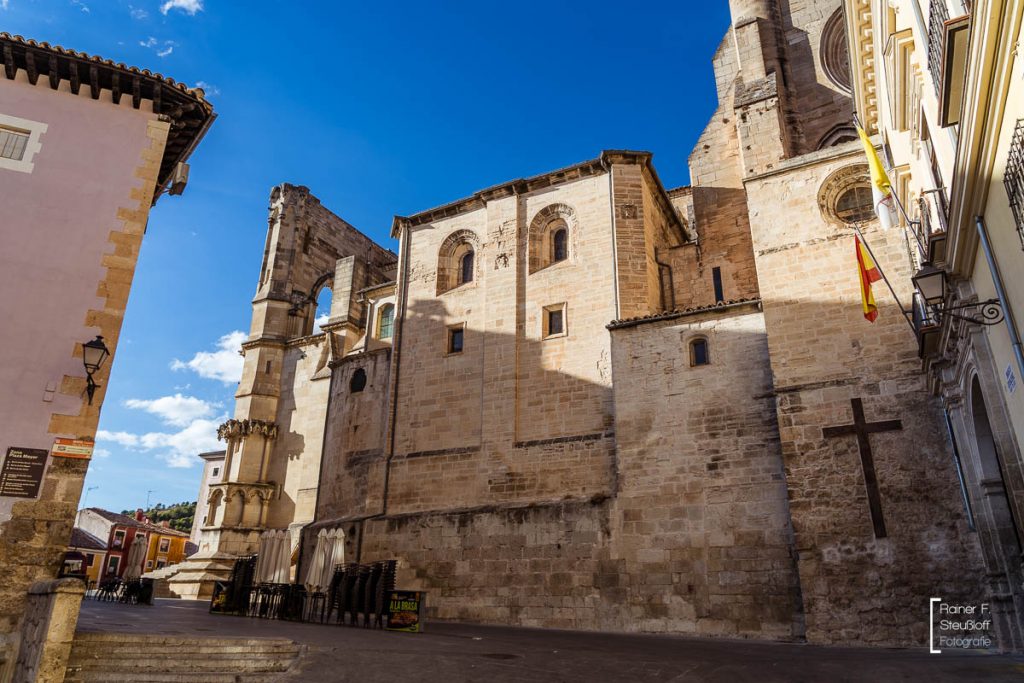
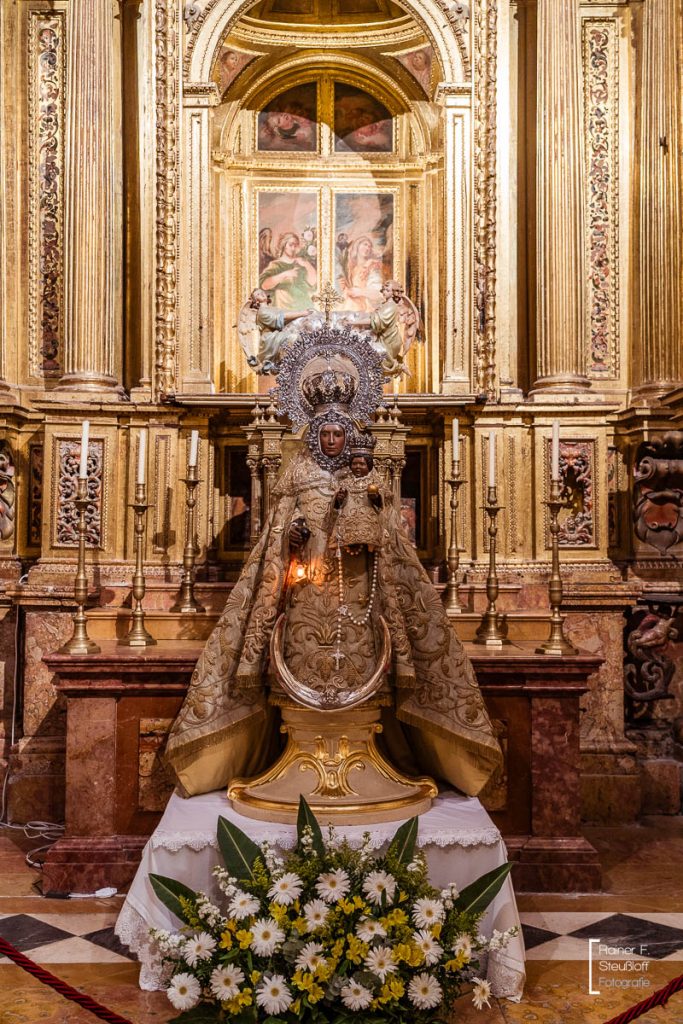
Unter dem Patronat der Jungfrau Maria und des hl. Julián stehende Kathedrale von Cuenca